
Solar System Installation: What Homeowners Must Know
Learn the essential steps in a solar system installation, from choosing an installer to passing inspection, so you can avoid common mistakes.

By Nathan Russell
Learn more about Solar Panel Installation and Repair for guides, costs, and what to expect.
Compare Solar Panel Installation and Repair Pros Near You

Enter your ZIP code to compare top-rated local professionals and request free quotes.
When you decide to go solar, the installation itself is where your savings journey truly begins. A well-executed solar system installation can cut your electricity bills for decades, while a rushed or poorly planned job can lead to headaches, inefficiency, and unexpected costs. In this guide, we walk you through every stage of the process, from the initial site assessment to the final grid connection, so you can approach your project with confidence and avoid the most common pitfalls.
How the Solar System Installation Process Works
The journey from signed contract to a fully operational solar array typically takes four to eight weeks, depending on your location, the complexity of your roof, and local permitting timelines. Understanding this timeline helps you plan your expectations and budget accordingly. The process is more than just mounting panels; it involves engineering, electrical work, and coordination with your utility company.
Here are the core stages you will experience:
- Site assessment: A technician evaluates your roof's condition, orientation, shading, and structural integrity.
- System design and engineering: Your installer creates a custom layout that maximizes sun exposure and meets local code requirements.
- Permitting and approvals: The installer submits your design to your city or county and your utility for interconnection approval.
- Physical installation: Crews install racking, panels, inverters, and wiring, usually over one to three days.
- Inspection and grid connection: A local inspector verifies the work, and your utility installs a net meter or approves your system for operation.
Each step carries its own set of considerations. For instance, the site assessment can reveal that your roof needs repairs before panels can be mounted, which adds time and cost. A good installer will communicate these findings clearly and help you adjust your plan. The permitting phase is often where projects slow down, so choose an installer with a proven track record of navigating local bureaucracy efficiently.
Choosing the Right Installer: Credentials and Red Flags
Your installer is the single most important factor in the success of your solar system installation. A reputable company will have proper licensing, insurance, and industry certifications, such as NABCEP (North American Board of Certified Energy Practitioners) accreditation for its designers and installers. They should also have a strong local presence, which matters for warranty service and support years down the line.
Ask every candidate for a portfolio of completed installations in your area, and contact those homeowners for references. Pay attention to how they handle your questions: a patient, transparent installer who explains options without pressure is a good sign. Red flags include high-pressure sales tactics, demands for large upfront deposits, and vague answers about equipment or warranties.
You should also verify that your installer is not subcontracting the entire job to an unvetted crew. While subcontractors are common, the lead contractor must retain responsibility for quality and code compliance. Get everything in writing, including the exact equipment brands, model numbers, and performance guarantees, before you sign anything.
What to Expect on Installation Day
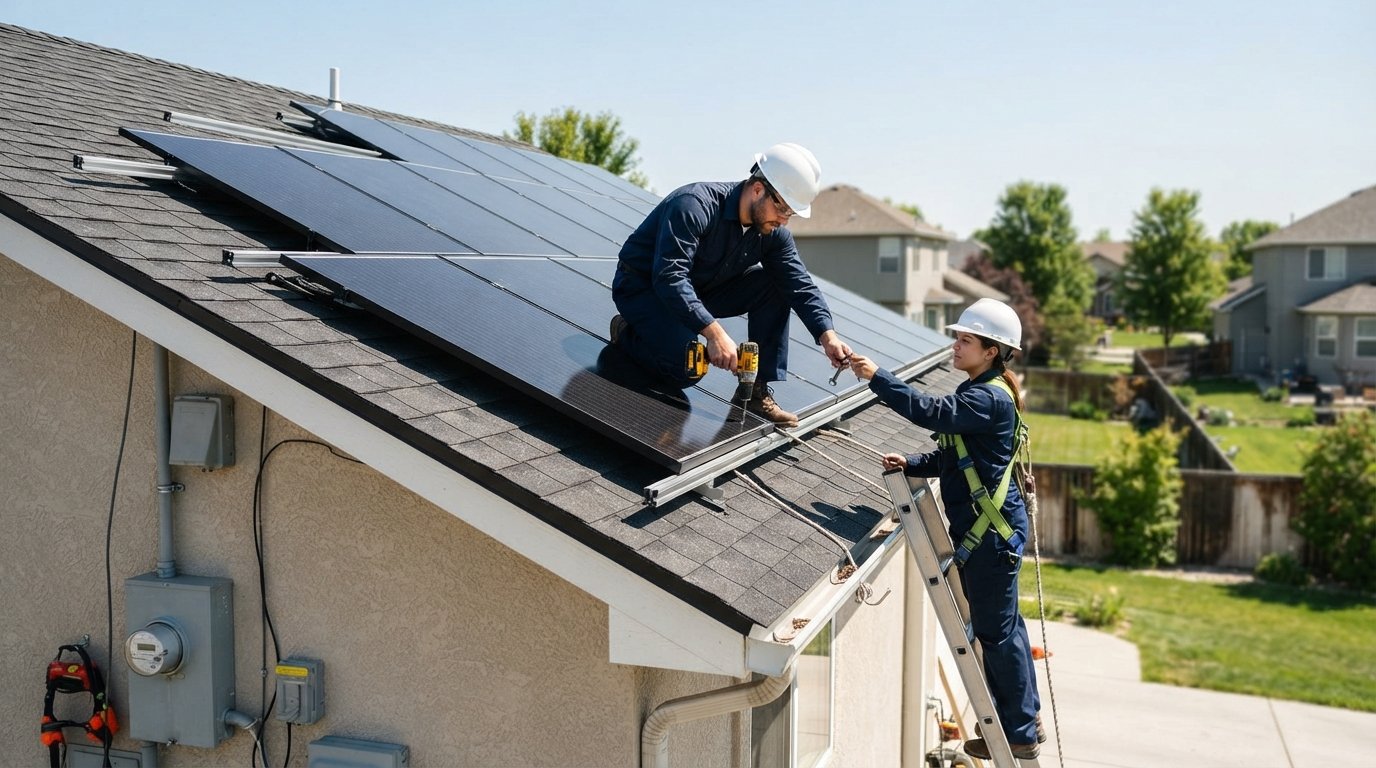
On the scheduled day, your installer will arrive with the necessary equipment and a crew that may range from two to six people, depending on the system size. They will begin by setting up safety equipment and protecting your property with tarps and plywood where needed. The crew will then install the racking system, which must be anchored securely to your roof's rafters, not just the decking.
After the racking is in place, the panels are mounted and wired together. The inverter, which converts DC power from the panels to AC power for your home, is installed either on the side of your house or integrated into each panel as a microinverter. The crew will also run conduit from the array to your electrical panel and install a dedicated solar disconnect switch, which is a critical safety feature.
Most installations take one to three days. During this time, you may experience a brief power outage while the crew connects your new equipment to your main panel. Your installer should notify you in advance if that will be necessary. Once the physical work is complete, the crew will walk you through the system's components and basic operation, and show you how to monitor your production and consumption.
Post-Installation: Inspections, Permits, and Going Live
After the crew packs up, your system is not yet ready to power your home. Your local building department must perform a final inspection to ensure the installation meets all electrical and fire safety codes. This inspection typically happens within a few days to a couple of weeks after installation. Your installer is responsible for scheduling the inspection and should be present during it to address any issues.
Following a successful inspection, you will need permission to operate (PTO) from your utility company. The utility will review your interconnection agreement and may install a new bidirectional net meter that tracks both the electricity you draw from the grid and the excess power you send back. This process can take a few days to several weeks, depending on your utility's workload and policies.
Once you receive PTO, you can flip the switch and start generating solar power. It is a satisfying moment, but it is also the start of a new responsibility: monitoring your system's performance. Most modern systems include online monitoring through a mobile app, which lets you track daily production, spot anomalies, and confirm that your system is performing as expected. If you notice a sudden drop in output, contact your installer to diagnose the issue. Regular cleaning and occasional maintenance are minimal but important for long-term efficiency.
Financing Your Solar Installation: Options and Costs
The upfront cost of a solar system installation is often the biggest barrier for homeowners. However, you have multiple ways to finance your project, each with its own trade-offs. Cash purchases offer the highest long-term savings because you own the system outright and can take full advantage of the 30% federal Investment Tax Credit (ITC). Solar loans allow you to spread the cost over 10 to 20 years, with low monthly payments that are often offset by your energy savings.
Leases and Power Purchase Agreements (PPAs) require little to no money down, but you do not own the system, and the tax credit goes to the financing company. These options can still reduce your electricity bills, but they typically offer lower lifetime savings than ownership. Before choosing a financing route, compare the total cost, interest rates, and contract terms carefully. For a detailed breakdown of typical costs, you can read our guide on 8 kW solar system costs to understand what a common home size might run you.
Remember that the ITC is a dollar-for-dollar reduction in your federal income tax, not just a deduction. You can also combine it with state incentives, rebates, and net metering credits to shorten your payback period. Many homeowners see a payback period of six to ten years, after which their electricity is essentially free. Use a solar cost calculator or consult with a financial advisor to model your specific situation.
Common Mistakes to Avoid During Solar Installation
Even with a good installer, mistakes can happen if you are not vigilant. One of the most common errors is neglecting to repair your roof before installation. Panels are designed to last 25 to 30 years, so if your roof is near the end of its life, you will need to remove and reinstall the system to replace it, which is costly. Address any roof issues before the solar installation begins.
Another frequent mistake is choosing the cheapest quote without scrutinizing the equipment. All panels and inverters are not created equal, and a slightly higher upfront cost for premium components can pay off in better performance and durability. Look for panels with high efficiency ratings and strong warranties, and inverters with proven reliability. Also, make sure your installer includes a monitoring system, as this is essential for tracking performance.
Finally, do not ignore the fine print in your contract. Pay attention to the production guarantee, which is a promised level of annual output, and the workmanship warranty, which covers the installation itself. If your system underperforms, these guarantees are your safety net. Ask your installer to explain how they will handle any claims if the system does not meet the guarantee in the first few years. For more insights on the financial side, our article on 8 kW solar system cost covers the numbers you need to plan your budget.
Maintenance and Long-Term Performance
Solar panels are remarkably low maintenance, but they are not zero maintenance. The primary task is keeping them clean and free of debris, as dirt, leaves, bird droppings, and snow can reduce output by up to 20% in some cases. In most climates, rain is sufficient to wash away light dust, but in dry or dusty areas, you may need to hose them down or hire a professional cleaning service a few times a year.
Beyond cleaning, you should inspect your system annually for signs of wear, such as loose racking bolts, damaged wiring, or corrosion. Your inverter may also need replacement after 10 to 15 years, which is a significant but manageable expense. Many manufacturers offer 25-year warranties on panels and 10 to 12 years on inverters, so check your warranty coverage before paying out of pocket.
Monitoring is your best tool for catching issues early. If your production drops unexpectedly, check your monitoring app first, then inspect your system visually. If you cannot identify the problem, contact your installer for a diagnostic visit. Regular attention to your system will ensure it continues to deliver the savings and environmental benefits you signed up for.
Is Solar Right for Your Home?
Before you commit to a solar system installation, take a step back and assess your home's suitability. The ideal conditions are a south-facing roof with little to no shading, a roof age under 15 years, and a household that uses a significant amount of electricity during daylight hours. Even if your roof is not perfectly oriented, modern panels and inverters can still deliver meaningful savings, but the payback period may be longer.
Your local electricity rates and net metering policies also play a critical role. If your utility offers full retail net metering, you will get the most value for the excess power you send to the grid. If not, you may want to consider a battery storage system to use more of your own solar power, though that adds to the upfront cost. Research your state's incentives and policies on sites like the Database of State Incentives for Renewables and Efficiency (DSIRE) to understand your specific financial picture.
Ultimately, the decision comes down to your long-term goals. If you plan to stay in your home for at least five years, solar is likely a sound investment. It increases your property value, protects you from rising utility costs, and reduces your carbon footprint. On the other hand, if you plan to move soon, a solar loan with a transferable agreement might still be attractive to buyers, but a lease can be more complicated. Weigh these factors carefully, and if you are ready to move forward, get quotes from multiple installers to compare pricing and quality. In our 8 kW solar system cost guide, you can find a detailed example to help you evaluate offers.
Solar system installation is a significant undertaking, but with the right preparation and partner, it can be one of the most rewarding upgrades you make to your home. Take your time, do your research, and focus on long-term value over short-term savings. The result will be a system that powers your home cleanly and affordably for decades to come.