
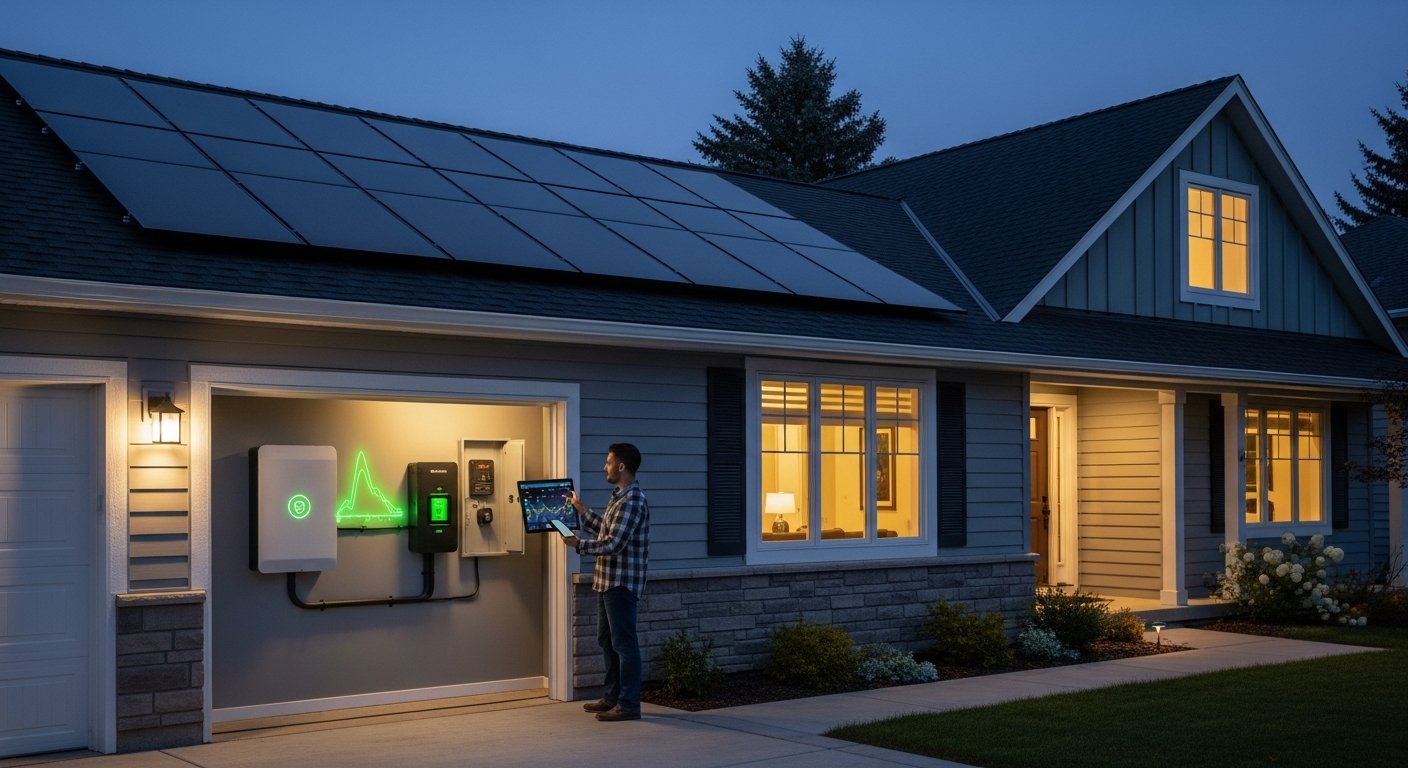
Solar Plus Battery Storage: A Smart Home Upgrade
Add a battery to your solar array to slash peak-time power bills, gain backup power during outages, and take real control of your home energy.
By satyam Contributor
Learn more about Solar Panel Installation and Repair for guides, costs, and what to expect.
Compare Solar Panel Installation and Repair Pros Near You

Enter your ZIP code to compare top-rated local professionals and request free quotes.
The days of simply bolting panels to a roof and calling it a day are fading. Homeowners are increasingly looking at the bigger picture, one that includes not just generating power but also keeping it for when the sun goes down. This shift in thinking is where solar plus battery storage steps in, moving from a niche add-on to a central part of the modern home energy plan. It is no longer just about reducing your electric bill; it is about taking control of your home's power supply, building resilience against outages, and maximizing the return on your solar investment.
For many, the appeal is straightforward: a solar-plus-storage system allows you to store the excess energy your panels produce during the day and use it at night or during peak demand times. This simple concept has profound implications for your wallet and your peace of mind. Whether you are dealing with time-of-use rates, frequent grid instability, or just want to be less dependent on the utility company, combining solar with a battery changes the equation. In this guide, we will break down the mechanics, the financial logic, and the practical steps to determine if this powerful combination is the right move for your home.
What Does a Solar Plus Battery Storage System Actually Do?
At its core, a solar-plus-storage system is a partnership between two key pieces of technology. The solar panels, typically mounted on your roof, convert sunlight into direct current (DC) electricity. An inverter then converts that DC electricity into the alternating current (AC) electricity that your home appliances use. In a traditional solar setup without a battery, any electricity you do not use immediately is sent back to the grid, often earning you credits through a process called net metering.
Adding a battery changes this flow. Instead of sending all that excess power to the grid, the battery captures and stores it. When your panels are no longer producing power in the evening, your home automatically draws from the battery instead of pulling from the grid. This allows you to run your air conditioning, charge your electric vehicle, and power your appliances with sunlight long after the sun has set. It is essentially a personal power plant and reservoir, giving you a level of energy independence that was previously impossible for most homeowners.
The Core Components in a Nutshell
To truly understand the value, it helps to know the main parts involved. While the specific hardware can vary, most systems share these common elements:
- Solar Panels: The engine of the system, capturing sunlight and generating DC electricity.
- Inverter(s): Converts DC power from the panels into usable AC power for your home. Some systems use a single string inverter, while others use microinverters or power optimizers. Battery systems often require a separate inverter or a hybrid inverter to manage the DC power stored in the battery.
- Battery Storage: The reservoir, typically a lithium-ion unit, that stores excess electricity for later use. This is the crucial addition that distinguishes a solar-plus-storage system from a standard solar installation.
- Monitoring System: Software and hardware that track your energy production, consumption, and battery status in real time, often through a smartphone app.
- Do you experience frequent power outages? If so, the backup power capability alone can justify the cost.
- Does your utility charge high rates during peak hours? If yes, a battery can save you significant money through load shifting.
- Is your goal to maximize your energy independence? A battery is the critical component for reducing your reliance on the grid.
- Do you have or plan to get an electric vehicle? Storing solar power to charge your EV at night can be a huge financial win.
- Is your primary goal to 'go green'? Using more of your own solar power reduces the demand for fossil-fuel-generated electricity.
Understanding these components is the first step. The real magic, however, lies in the intelligent software that manages the flow of energy. The system automatically decides whether to power your home, charge the battery, or send power to the grid based on your usage patterns and the time of day. This seamless automation is what makes the system so user-friendly; you do not have to manually switch between power sources.
The Financial Case: Why Adding a Battery Makes Sense
The most compelling reason for many homeowners to add a battery is the potential for substantial financial savings, particularly when it comes to how you are billed for electricity. Many utilities have shifted to time-of-use (TOU) rate plans, where electricity costs more during peak demand hours (typically late afternoon and evening) and less during off-peak hours (typically late at night). Without a battery, your solar panels are generating the most power during the middle of the day when rates are low. You end up selling that cheap power back to the grid and buying expensive power later in the evening when your panels are idle.
A battery flips this script. You store the low-value, midday solar power and use it during the high-value, peak-rate times. This practice, known as load shifting or arbitrage, can significantly reduce or even eliminate your electricity bill. By avoiding the purchase of expensive peak-time power, the battery accelerates the payback period for your entire solar investment. Instead of just offsetting your usage, you are actively gaming the rate structure in your favor. For a deeper look at the cost dynamics, understanding the upfront investment is key. You can find a detailed breakdown of the costs involved in our guide on understanding solar battery storage cost.
Energy Independence and Backup Power: The Real Value of a Battery
Beyond the purely financial calculations, there is an increasingly valuable benefit: resilience. Grid outages are becoming more frequent and severe due to extreme weather events and aging infrastructure. A standard solar system is often required to shut down during a power outage for safety reasons, to prevent back-feeding electricity to the grid and endangering utility workers. This means that without a battery, you could be sitting in the dark even on a sunny day.
With a solar-plus-battery system, you gain true backup power. When the grid goes down, your system seamlessly disconnects from the grid and powers your home using the energy stored in your battery. This 'island mode' capability keeps your lights on, your refrigerator running, and your internet connected. For those who work from home, have medical equipment needs, or simply live in areas prone to severe weather, this backup capability is not a luxury; it is a necessity. This energy independence is a major driver for adoption, as it provides peace of mind that is difficult to quantify but impossible to ignore.
How to Size and Choose Your Solar Plus Battery System
Deciding on the right system for your home requires a careful assessment of your energy needs and goals. There is no one-size-fits-all solution. The process typically begins with an analysis of your historical electricity usage to understand your average daily consumption and peak load. This data is crucial for determining how large your solar array and battery capacity need to be. A professional installer will also evaluate your roof's solar potential, including its angle, orientation, and shading.
When choosing a battery, you will consider a few key specifications. Usable capacity, measured in kilowatt-hours (kWh), tells you how much electricity the battery can store. Power rating, measured in kilowatts (kW), tells you how much electricity the battery can deliver at once. A higher power rating can run more appliances simultaneously. You also need to decide whether you want a battery that can support your entire home or just critical loads, such as a refrigerator and lights. This decision significantly impacts the size and cost of the system. The goal is to right-size the system to avoid paying for excess capacity you will not use while ensuring you have enough to meet your needs.
Navigating Incentives and Financing for Your New System
The upfront cost of a solar-plus-storage system can be significant, but it is important to look at the total cost after incentives. The federal Investment Tax Credit (ITC) is a major factor, allowing you to deduct a substantial percentage of the total system cost from your federal taxes. While the credit was historically for solar panels alone, it now also applies to battery storage, provided the battery is charged by your solar panels. This makes the combined system much more affordable than it was just a few years ago.
Beyond the federal credit, many states and local utilities offer their own rebates and incentives for energy storage. These can include cash rebates, performance-based incentives, or property tax exemptions. It is crucial to research the specific incentives available in your state, as they can dramatically reduce the net cost of your project. To make the investment even more accessible, various financing options exist, including solar loans, leases, and power purchase agreements (PPAs). A reputable installer can help you navigate these choices to find a plan that fits your budget. Since the details of these incentives change, it is always wise to verify the current rules with official sources.
Is Solar Plus Storage Right for Your Home?
The decision to invest in solar plus battery storage is a personal one that depends on your priorities. To help you evaluate, consider the following key questions. If you answer 'yes' to several of them, a battery is likely a wise investment.
If you do not face high peak rates or frequent outages, a standard solar-only system might be more cost-effective for you. However, for the vast majority of homeowners, the benefits of a battery extend far beyond simple economics. It offers a hedge against future utility rate increases and provides a level of control over your energy future that is incredibly appealing. The trend is clear: as battery prices continue to fall and grid instability rises, solar-plus-storage is becoming the new standard for residential solar. The technology has matured, the financial case is stronger than ever, and the peace of mind is priceless.
Learn more about Solar Panel Installation and Repair for guides, costs, and what to expect.
Compare Solar Panel Installation and Repair Pros Near You
Enter your ZIP code to compare top-rated local professionals and request free quotes.