
Solar Panel Maintenance: Extend Life and Savings
Learn the essential solar panel maintenance steps to protect your investment, avoid costly repairs, and keep your system generating at peak efficiency for years.

By Caleb Morgan
Learn more about Solar Panel Cleaning for guides, costs, and what to expect.
Compare Solar Panel Cleaning Pros Near You

Enter your ZIP code to compare top-rated local professionals and request free quotes.
Your solar array is a long-term investment, but it is not a set-and-forget system. Dust, leaves, bird droppings, and even weather can slowly reduce its output. The good news is that a simple, consistent maintenance routine can keep your panels generating at peak performance for decades. This guide walks you through exactly what to check, how to clean safely, and when to call in a professional, so you can protect your investment and maximize your energy savings.
Why Solar Panel Maintenance Matters for Your ROI
Every solar panel system has an expected lifespan of 25 to 30 years, but that lifespan assumes basic upkeep. When panels are neglected, their efficiency can drop by 5% to 20% or more, depending on the level of dirt, debris, and damage. For a typical homeowner, that could mean losing hundreds of dollars in potential electricity savings each year. Over the lifetime of your system, that adds up to thousands of dollars in lost value.
Regular maintenance also protects your warranty. Most manufacturers require proof that the system has been properly maintained to honor performance guarantees. If you skip routine checks and something fails, you might be left paying for repairs that should have been covered. In short, spending a little time or money on maintenance now can save you from big surprises later.
How Often Should You Inspect Your Panels?
As a general rule, you should perform a visual inspection of your solar panels every three to six months. This helps you spot debris, cracks, or wiring issues before they become serious. However, your location and environment may require more frequent checks. If you live in a dusty area, near a construction site, or under trees that shed leaves, you may need to inspect monthly.
After major weather events like hailstorms, heavy snow, or high winds, it is wise to do an immediate check. Even if the panels look fine from the ground, a small crack or loose connection can grow into a bigger problem. Look for obvious signs of damage: shattered glass, exposed wires, or water pooling around the mounting system.
The Essential Solar Panel Maintenance Checklist
To keep your system running smoothly, you do not need to be a solar engineer. A simple checklist will catch most issues early. Here is what to look for during each inspection:
- Debris accumulation: Leaves, twigs, bird nests, and pollen can block sunlight and create hot spots.
- Dirt and grime: A thin film of dust or soot can reduce light absorption by up to 15%.
- Physical damage: Look for cracks, chips, discoloration, or warped frames.
- Loose wiring or connections: Check that all cables are secure and free from corrosion or animal chewing.
- Inverter status: Your inverter should show a green or solid light; any blinking red or orange light means a problem.
If you spot any of these issues, address them quickly. A small bird's nest can turn into a fire hazard if it sits against a hot panel. And a cracked panel may still produce power, but it is more vulnerable to moisture damage that can spread to other components.
How to Clean Solar Panels Safely and Effectively
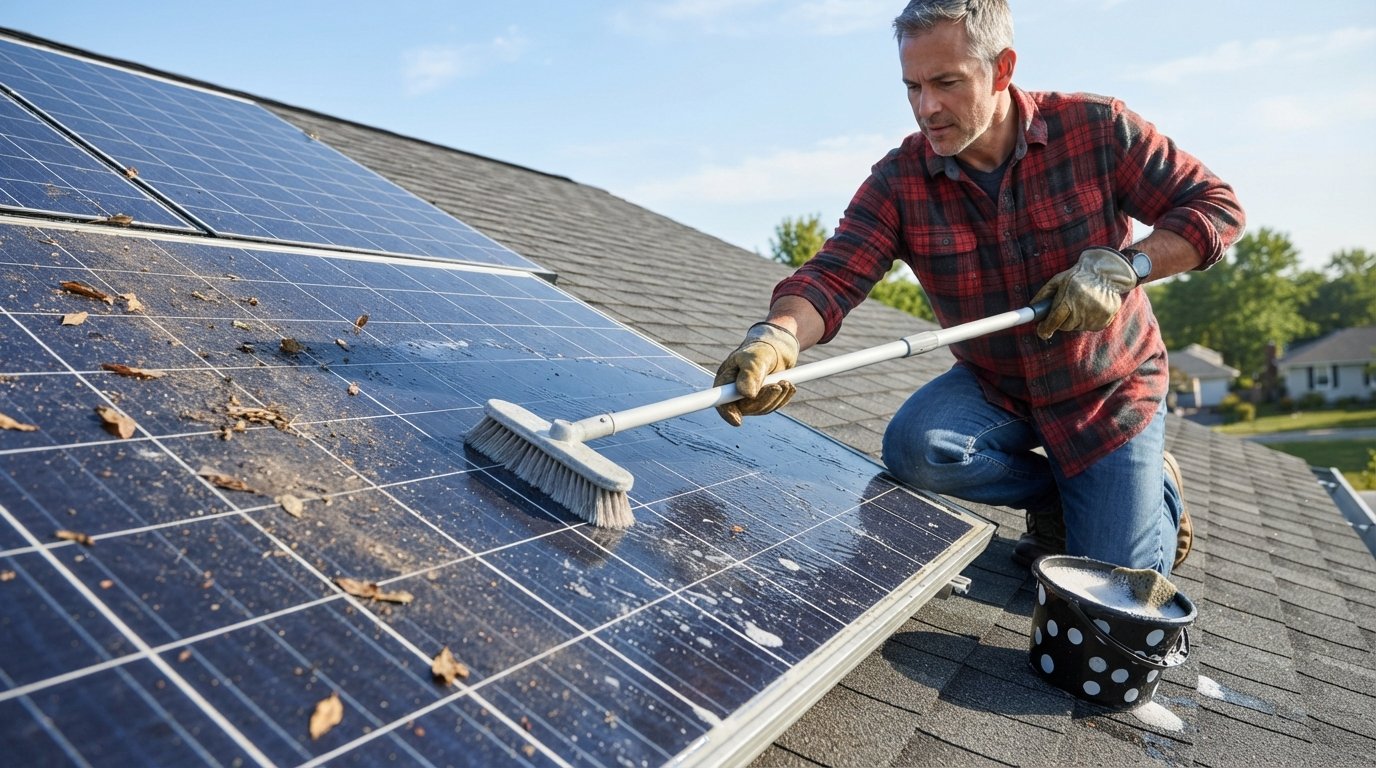
Cleaning your solar panels is one of the most effective maintenance tasks you can do. In dry climates or after a long dry spell, a simple rinse with a garden hose can restore much of the lost output. But for more stubborn grime, you will need a soft brush, soapy water, and a squeegee. Avoid using abrasive tools or harsh chemicals, as they can scratch the glass and void your warranty.
Always clean your panels early in the morning or late in the evening when they are cool. Cold water on a hot panel can cause thermal shock and crack the glass. Also, never walk on your panels. If you cannot reach them safely from the ground, hire a professional cleaner.
When you clean, use a soft sponge or cloth and a mild, non-abrasive soap. Rinse thoroughly with clean water to avoid leaving soap film that attracts more dirt. If your panels are angled at a steep pitch, the rain may be enough to keep them clean, but a manual wash every six months is still a good idea.
When Professional Maintenance Is Worth the Cost
Some maintenance tasks are best left to the pros. If your system is large, your roof is steep, or you are not comfortable working around electrical components, hire a licensed solar technician. Professional maintenance services typically cost between $150 and $300 per visit, but they often include a full system check, inverter diagnostics, and a detailed report.
Professional cleaning is especially valuable if you have hard water stains, bird droppings that have baked on, or a system that is difficult to access. Technicians use specialized equipment like deionized water brushes that clean without leaving streaks. They can also identify potential issues that you might miss, like micro-cracks or loose mounting bolts.
If you are considering a professional inspection, look for a company that is NABCEP-certified (North American Board of Certified Energy Practitioners). This certification ensures the technician has passed rigorous training in solar system design and maintenance. You can also ask your original installer if they offer maintenance packages.
Monitoring Your System: The Key to Early Problem Detection
Modern solar systems come with monitoring software that tracks your energy production in real time. This is your first line of defense against performance drops. Most monitoring platforms let you see daily, weekly, and monthly output, and they will send an alert if generation falls below a certain threshold.
To use monitoring effectively, you need a baseline. Note your system's average daily output during the first month after installation. If you see a sudden dip of more than 10% that lasts several days, something is wrong. Check for debris, shade from new tree growth, or inverter error codes. If you cannot find the cause, call a technician.
Monitoring also helps you track the long-term health of your system. A slow decline in output over several years might indicate panel degradation or inverter aging. By catching these trends early, you can plan for replacements or repairs before a complete failure occurs.
Seasonal Maintenance: Adapting to the Weather
Your maintenance routine should change with the seasons. In spring, pollen and bird nesting are common. In summer, heat can cause panels to expand and contract, which may loosen mountings. Autumn brings falling leaves, and winter can mean snow and ice buildup.
In snowy regions, you may be tempted to shovel snow off your panels, but this is rarely necessary. Panels are designed to shed snow as they warm up, and the sunlight will often melt it off within a few days. If you do decide to remove snow, use a soft roof rake and never use a metal shovel that can scratch the glass.
During storm season, check for branches that may have fallen on your panels or roof. Trim any overhanging limbs that could scrape or shade your system. After heavy rain, inspect the area around your panels for standing water, which could indicate a drainage issue that might affect the mounting structure.
The Role of Inverter and Battery Maintenance
Your inverter is the heart of your solar system, converting DC power to AC power for your home. It is also the most likely component to fail. Check your inverter's display regularly to ensure it is operating within normal parameters. Most inverters have a lifespan of 10 to 15 years, so plan for a replacement at some point.
If you have a solar battery, it also requires attention. Batteries should be kept in a temperature-controlled environment, and you should check the manufacturer's guidelines for state of charge and ventilation. Lithium-ion batteries are largely maintenance-free, but lead-acid batteries may need to have their water levels topped up.
When your inverter or battery shows signs of trouble, do not attempt to repair it yourself. These components handle high voltage and are dangerous to work on. Call a certified technician who can safely diagnose and fix the issue.
Common Mistakes That Reduce Panel Lifespan
Even well-meaning homeowners can make mistakes that shorten the life of their solar panels. One common error is using a pressure washer to clean them. The high-pressure spray can force water under the panel edges and damage the seals. Another mistake is applying wax or coating to the glass, which can attract more dirt and reduce light transmission.
Ignoring small problems is another big mistake. A loose bolt or a tiny crack might seem harmless, but it can lead to bigger issues over time. Finally, do not assume that rain is enough to keep your panels clean. Rain does wash away some dust, but it can also leave mineral deposits that accumulate and block light.
To avoid these pitfalls, stick to the simple routine: inspect, clean with water and mild soap, and monitor your production. If you are ever unsure about a repair, err on the side of caution and call a professional.
How Maintenance Connects to Your Solar Investment
Your solar panels are a major purchase, and the return on that investment depends heavily on how well you care for them. A well-maintained system can produce up to 20% more energy over its lifetime compared to a neglected one. That extra energy translates directly into lower electricity bills and a faster payback period.
Maintenance also protects the resale value of your home. If you ever decide to sell, a clean, well-documented maintenance history will reassure buyers that the system is in good shape. On the other hand, a dirty or damaged system could become a negotiating point against you.
If you are just starting your solar journey, understanding maintenance is part of the planning process. Before you commit to a system, ask your installer about their recommended maintenance schedule and what is covered under warranty. This will help you budget for future costs and avoid surprises.
When to Consider Upgrading or Replacing Panels
Even with perfect maintenance, solar panels eventually lose efficiency. Most manufacturers guarantee that panels will still produce at least 80% of their original output after 25 years. If you notice your system's output dropping below that threshold, or if your monitoring shows a sudden decline that cannot be fixed, it may be time to replace some or all of your panels.
Upgrading to higher-efficiency panels can also make sense if your energy needs have grown. For example, if you have added an electric vehicle or a heat pump, you might need more capacity. Newer panels, like the 410 watt solar panel, offer better performance per square foot, which is especially useful if you have limited roof space.
Before you decide to replace anything, get a professional assessment. They can test each panel individually and tell you which ones are underperforming. Sometimes, a simple repair, like replacing a faulty inverter, can restore your system's output without the cost of new panels.
Final Thoughts on Protecting Your Solar Investment
Solar panel maintenance does not have to be complicated or expensive. A few hours of your time each year, plus an occasional professional checkup, can keep your system running efficiently for decades. By staying proactive, you will maximize your energy savings, protect your warranty, and enjoy the full benefits of your renewable energy investment.
Remember that a well-maintained system is a safe system. Regular inspections catch potential fire hazards, electrical faults, and structural issues before they become dangerous. So make a schedule, stick to it, and let your solar panels do what they do best: turning sunlight into savings.