
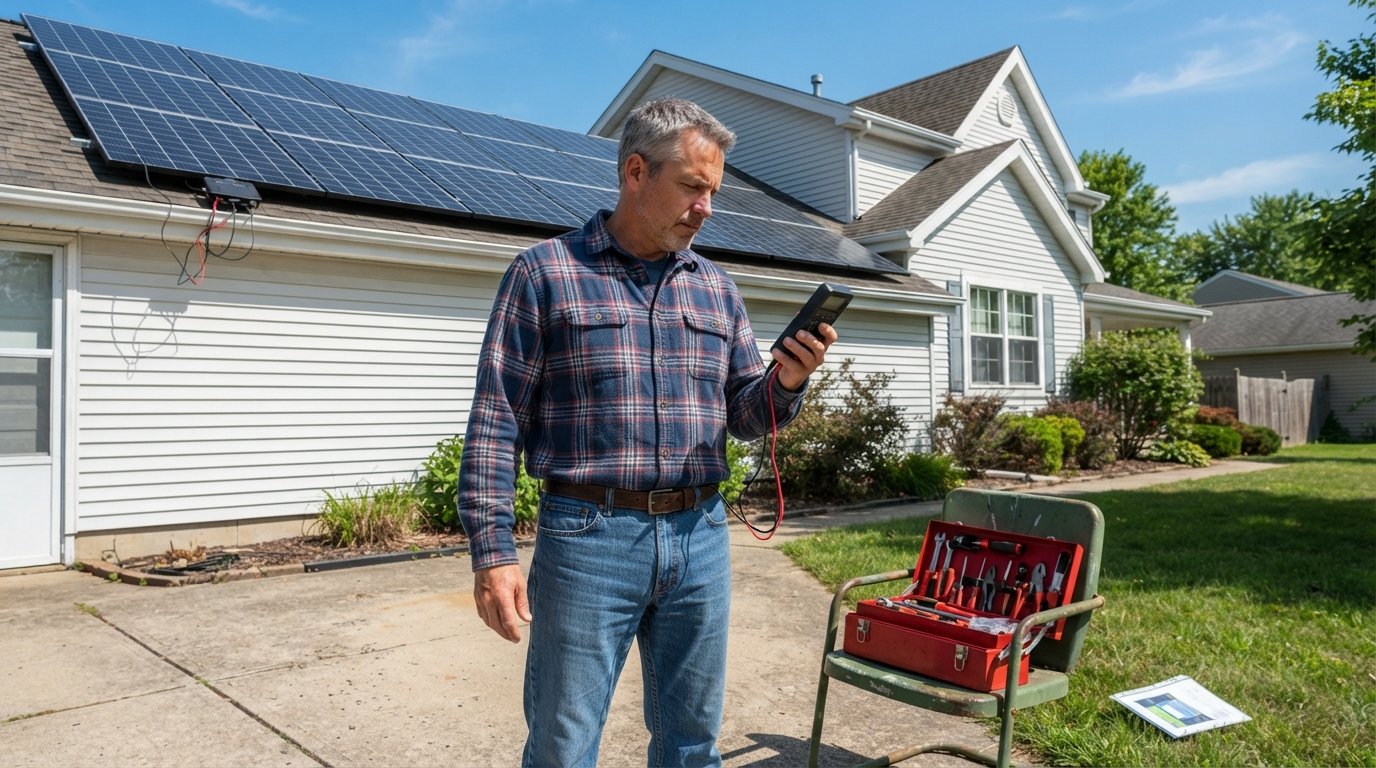
Solar Panel Lifespan: How Long They Last
Solar panels typically last 25 to 30 years, but their efficiency declines slowly over time. Learn how to maximize your system's lifespan and savings.
By satyam Contributor
Learn more about Solar Panel Installation and Repair for guides, costs, and what to expect.
Compare Solar Panel Installation and Repair Pros Near You

Enter your ZIP code to compare top-rated local professionals and request free quotes.
When you invest in a solar energy system, one of the first questions that comes to mind is, how long will these panels actually work? The answer matters because it directly affects your return on investment, your energy savings, and the overall value of your home. Solar panels are a long-term commitment, and understanding their lifespan is essential before you sign any contract. In this guide, we will break down the realistic expectations for solar panel lifespan, the factors that influence it, and what you can do to maximize the life of your system. By the end, you will know exactly what to ask your installer and how to protect your investment for decades to come.
The good news is that modern solar panels are incredibly durable. Most manufacturers back their products with performance warranties of 25 to 30 years, and many systems continue to produce electricity well beyond that period. However, the term "lifespan" can be misleading. It does not mean the panels stop working entirely after a certain number of years. Instead, it refers to the gradual decline in efficiency and output over time. A panel does not die on a specific date; it simply produces slightly less power each year. Understanding this degradation rate is the key to setting realistic expectations for your solar investment.
What Does Solar Panel Lifespan Really Mean?
When we talk about solar panel lifespan, we are really talking about two separate timelines: the physical lifespan and the useful economic lifespan. The physical lifespan is how long the panel remains functional and produces electricity. The useful economic lifespan is how long the panel produces enough power to justify its existence on your roof, meaning it generates energy at a cost lower than what you would pay the utility company. For most homeowners, the economic lifespan is what truly matters because it determines whether the system pays for itself and continues to deliver savings.
Most tier-one solar panel manufacturers guarantee that their panels will still produce at least 80% of their original rated output after 25 years. This means a 400-watt panel will still generate around 320 watts at the end of its warranty period. That is still a substantial amount of power, and many panels will continue to operate at 70% or even 60% efficiency for another 10 to 15 years after the warranty expires. In practice, a well-maintained system can easily last 30 to 40 years, though its output will be lower in its later years.
It is also important to distinguish between the panel itself and the rest of the system. The inverter, which converts the direct current (DC) produced by the panels into alternating current (AC) for your home, typically has a shorter lifespan of 10 to 15 years. You will likely need to replace the inverter at least once during the life of your solar array. Similarly, racking and mounting hardware can corrode or loosen over time, but these components are relatively inexpensive to repair. The solar panels themselves are the most durable part of the system, which is why they receive the longest warranties.
Degradation Rate: The Inevitable Decline
Every solar panel loses a small percentage of its efficiency each year. This is called the degradation rate, and it is a natural result of exposure to heat, UV radiation, and weather cycles. The industry average degradation rate is around 0.5% to 0.8% per year. A panel with a 0.5% degradation rate will still produce about 87% of its original output after 25 years, which is excellent. A panel with a 0.8% degradation rate will produce about 80% after the same period, which is still within warranty limits but noticeably lower.
Premium panels from manufacturers like LG, Panasonic, and SunPower often have degradation rates as low as 0.25% per year. This means after 25 years, they still produce over 90% of their rated output. These panels cost more upfront, but the extra efficiency over time can translate into significant energy savings, especially in sunny states like Texas, Florida, and Arizona. When you compare quotes from installers, be sure to ask about the degradation rate of the specific panels they are offering. A lower degradation rate is a sign of higher quality and a longer useful lifespan.
To put this into perspective, consider a 6-kilowatt (kW) system that produces about 9,000 kilowatt-hours (kWh) per year in a sunny region. With a 0.5% annual degradation rate, the system will produce approximately 7,850 kWh in its 25th year, a drop of about 13%. Over three decades, the cumulative output will be less than the original rating, but the system will still offset a significant portion of your electricity bill. The key is to plan for this decline and ensure your system is sized correctly from the start, so even with degradation, it meets your household's needs for years to come.
Factors That Affect How Long Solar Panels Last
While all solar panels degrade over time, the rate of degradation is influenced by several external factors. Understanding these can help you make informed decisions about installation, maintenance, and panel selection. Here are the primary factors that impact solar panel lifespan:
- Climate and weather: Extreme heat, humidity, and frequent hail or wind storms can accelerate wear and tear. Panels in desert climates like Arizona may degrade faster due to intense heat, while coastal areas face corrosion from salt spray.
- Installation quality: Poorly installed panels, loose wiring, or inadequate ventilation under the array can cause hotspots and premature failure. A professional installer with proper certifications is essential.
- Panel material and build quality: Panels with higher-grade silicon cells, robust glass, and corrosion-resistant frames tend to last longer. Look for panels with a 25-year or longer warranty as a marker of quality.
- Maintenance and cleaning: Dust, bird droppings, and debris can block sunlight and cause cells to overheat. Regular cleaning and inspections help maintain performance and identify issues early.
Another critical factor is the tilt and orientation of your panels. Panels that are installed at a steep angle in a high-wind area may experience more stress on their mounting system. Panels that are flat or low-tilted can accumulate dirt and water, which can lead to micro-cracks over time. Your installer should assess your roof's specific conditions and recommend the optimal tilt to balance energy production and longevity.
It is also worth noting that solar panels are rated to withstand significant impact, such as hail up to 1 inch in diameter at speeds of 50 miles per hour. However, extreme weather events can still cause damage. If you live in an area prone to hurricanes, tornadoes, or severe thunderstorms, you should ensure your system is installed to local building codes and consider additional insurance coverage for your solar array.
How to Maximize the Lifespan of Your Solar Panels
You can take proactive steps to ensure your solar panel system operates at peak performance for as long as possible. The good news is that most of these steps are simple and low-cost. First, schedule an annual inspection with a certified solar technician. They will check the electrical connections, the inverter, the mounting hardware, and the panels themselves for any signs of wear or damage. Early detection of issues can prevent small problems from becoming costly repairs.
Second, keep your panels clean. In most areas, rain will do a decent job of washing away dust and pollen, but if you live in a dry or dusty climate, you may need to rinse them with a garden hose a few times a year. Avoid using abrasive cleaners or high-pressure washers, as these can scratch the glass or force water into the panel edges. If your panels are difficult to access, consider hiring a professional cleaning service that specializes in solar arrays.
Third, monitor your system's performance. Most modern solar systems come with monitoring software that shows you real-time production and alerts you to anomalies. If you notice a sudden drop in output, it could indicate a malfunctioning panel, a failing inverter, or shading issues from new tree growth. Addressing these issues quickly will minimize lost energy and extend the life of your system. For more on choosing the right equipment, see our guide on 410 Watt Solar Panel: Power & Efficiency.
Warranties: What They Cover and What They Don't
Understanding your warranty coverage is crucial for protecting your solar investment. There are two main types of warranties: the product warranty and the performance warranty. The product warranty covers defects in materials and workmanship, such as cracked glass, failed diodes, or delamination of the backsheet. This warranty typically lasts 10 to 12 years, though some premium manufacturers now offer 25-year product warranties. The performance warranty guarantees that the panel will produce at least a certain percentage of its rated output for a specified period, usually 25 years.
It is important to read the fine print of any warranty before you purchase. Some warranties are prorated, meaning the coverage decreases over time. Others are transferable to a new homeowner if you sell your house, which can be a selling point. You should also verify that the installer is licensed and insured, and that they will honor the warranty if the manufacturer goes out of business. The solar industry has seen its share of bankruptcies, so it is wise to choose a manufacturer with a strong financial track record.
Most warranties do not cover damage caused by natural disasters, pests, or improper maintenance. For example, if a squirrel chews through your wiring, you will be responsible for the repair. If a tree falls on your roof and crushes your panels, your homeowner's insurance may cover the replacement, but it is not a warranty issue. To protect against these scenarios, you should review your insurance policy to ensure it covers the replacement cost of your solar system. Some insurers offer specific riders for solar panels, and the cost is usually modest.
When Should You Replace Solar Panels?
There is no fixed year when you must replace your solar panels, but there are signs that it may be time to consider an upgrade. The most obvious sign is a significant drop in performance that cannot be traced to a faulty inverter or soiling. If your system produces 30% less energy than it did when it was installed, and cleaning and repairs do not restore output, the panels may be nearing the end of their useful life. Another reason to consider replacement is if you want to increase your energy production, either because you have added an electric vehicle or expanded your home. In that case, replacing old panels with new, higher-efficiency models can be a smart investment.
Technological advancements are another factor. Solar panels today are far more efficient than those made just a decade ago. A 400-watt panel today takes up less roof space than a 250-watt panel from 2015. If your roof is limited in space, upgrading to higher-wattage panels can increase your total energy output without adding more physical panels. Before you decide to replace, however, get a professional assessment. Sometimes, adding a few new panels to your existing system is more cost-effective than replacing the entire array. For high-output options, check out our comparison of 540 Watt Solar Panel: Boost Your Energy Efficiency.
If you are considering a system upgrade, it is also a good time to evaluate your inverter. String inverters are less expensive but have a shorter lifespan, while microinverters or power optimizers can extend the effective life of your system and provide better monitoring. Replacing your inverter at the same time as your panels can simplify installation and ensure your system operates at peak efficiency for another 25 years.
The Environmental and Financial Impact of Long-Lasting Panels
The longevity of solar panels has a direct impact on their environmental benefits. The energy and resources required to manufacture a solar panel are significant, but the panel's operational life of 25 to 40 years allows it to generate clean energy far in excess of what was used to produce it. This is called the energy payback time, and for most panels, it is between 1 and 4 years. After that, every kilowatt-hour produced is essentially free of carbon emissions, making solar one of the most sustainable energy sources available.
Financially, a longer lifespan means a higher return on investment. The average cost of a residential solar system is around $20,000 after the 30% federal tax credit. If your system lasts 30 years, your cost per year is roughly $667, which is often less than what you would pay for grid electricity in a single year. The cumulative savings over three decades can be substantial, especially if utility rates continue to rise. In states with high electricity costs like California and Hawaii, the savings are even more pronounced.
To get a realistic estimate of your payback period, you can use a solar savings calculator, but you should also consider the degradation rate in your calculations. A system that degrades at 0.5% per year will produce more electricity over its lifetime than one that degrades at 0.8%, which can mean thousands of dollars in additional savings. When you receive quotes from installers, ask them to model your production over 25 years, including degradation. This will give you a clearer picture of the long-term financial benefit.
How to Choose Panels With a Long Lifespan
When you are shopping for solar panels, the lifespan and degradation rate should be top-of-mind. You can compare panels by looking at their warranty length, degradation rate, and the manufacturer's reputation. A panel with a 25-year performance warranty and a degradation rate below 0.5% is a solid choice. You should also consider the temperature coefficient, which measures how much output drops when temperatures rise. Panels with a lower temperature coefficient, such as -0.3% per degree Celsius, perform better in hot climates and will maintain their output longer.
It is also wise to check independent test results from organizations like the PV Evolution Labs (PVEL) or the International Electrotechnical Commission (IEC) certifications. These tests evaluate panels for durability, thermal cycling, humidity, and mechanical stress. Panels that pass these tests are more likely to have a long and reliable lifespan. Additionally, read reviews from other homeowners and check the manufacturer's financial stability. A company that is unlikely to go bankrupt will be better able to honor its warranties, which is a critical safety net.
Finally, do not overlook the value of a professional installation. A well-installed system will not only produce more energy but also last longer. Look for installers who are certified by the North American Board of Certified Energy Practitioners (NABCEP) and who offer a workmanship warranty of at least 5 years. The installation quality is just as important as the panel quality. If you are planning a budget-conscious upgrade, our guide on Affordable 5K Solar Panels: Top Picks can help you find cost-effective options that still offer excellent longevity.
In summary, solar panel lifespan is not a fixed number but a range that depends on quality, environment, and care. With a typical degradation rate of 0.5% per year, most panels will still produce around 85% of their original output after 25 years, and many will continue working for several more years. By choosing high-quality panels, having them professionally installed, and performing regular maintenance, you can maximize your system's lifespan and enjoy clean, affordable energy for decades. The upfront cost may be significant, but the long-term savings and environmental benefits make solar a wise investment for any homeowner.
Learn more about Solar Panel Installation and Repair for guides, costs, and what to expect.
Compare Solar Panel Installation and Repair Pros Near You
Enter your ZIP code to compare top-rated local professionals and request free quotes.