
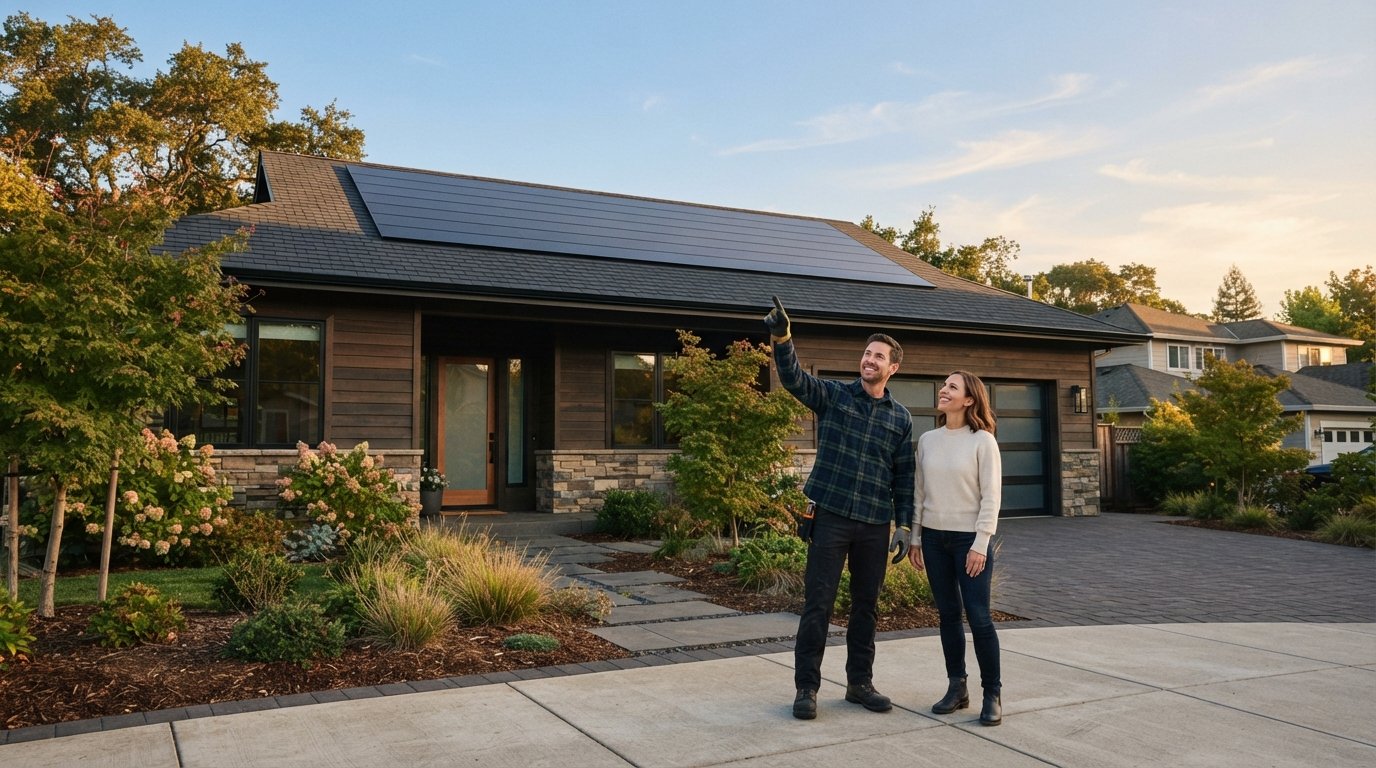
Solar Panel Aesthetics: Integrated Roof Design Trends
Discover how integrated solar roof design and modern panel aesthetics can boost your home's curb appeal and value.

By Liam Parker
Learn more about Solar Panel Installation and Repair for guides, costs, and what to expect.
Compare Solar Panel Installation and Repair Pros Near You

Enter your ZIP code to compare top-rated local professionals and request free quotes.
The era of bulky, blue-tinged solar panels strapped awkwardly onto rooftops is fading. Homeowners today are asking a smarter question: how can solar power enhance my home's architecture rather than detract from it? This shift in priorities has placed solar panel aesthetics and integrated solar roof design at the forefront of the renewable energy conversation. A well-designed solar array no longer signals a compromise; it signals a thoughtful investment in both energy independence and curb appeal.
For many, the visual impact of traditional panels is a genuine barrier. The good news is that the industry has responded with innovative products and installation techniques that blend seamlessly with modern and classic architecture alike. This article explores the latest trends in integrated solar design, helping you understand how to achieve a beautiful, efficient, and valuable solar installation for your home.
Why Solar Panel Aesthetics Matter More Than Ever
The decision to go solar is often driven by financial and environmental motivations, but the visual outcome carries significant weight. A rooftop is a major architectural element, and an unattractive installation can detract from the overall beauty of your home. More importantly, it can affect your property's resale value. Real estate studies consistently show that homes with well-integrated solar systems sell faster and at a premium compared to those with poorly installed or visually obtrusive panels.
Beyond resale, there is a growing sense of personal pride in a home that looks good and generates clean energy. Modern solar panel aesthetics are about creating a cohesive look, where the technology feels like a natural extension of the roof, not an afterthought. This focus on design is crucial for widespread adoption, as it removes a significant psychological hurdle for homeowners who care deeply about their home's appearance.
Furthermore, many homeowners associations (HOAs) and historic district committees have strict guidelines regarding rooftop alterations. A sleek, integrated design is far more likely to receive approval than a traditional, rack-mounted system. This makes understanding integrated solar roof design essential not just for aesthetics, but for navigating local regulations and ensuring a smooth installation process.
The Rise of Integrated Solar Roof Tiles and Shingles
The most significant advancement in solar aesthetics is the development of solar roof tiles and shingles. Unlike traditional panels that are mounted on top of existing roofing, these products replace your roof itself. This approach creates a seamless, low-profile appearance that many homeowners find far more attractive. Instead of seeing a distinction between the roof surface and the solar array, the entire roof becomes a unified, energy-generating surface.
These integrated systems are not just about looks; they offer superior protection against the elements. Because they are designed as roofing materials, they are built to withstand high winds, hail, and extreme temperatures. While the upfront cost can be higher than traditional panels, the value proposition includes the cost of the roof itself. You are essentially getting a new, durable roof and a power plant in one, which can be a compelling financial argument, especially if your roof is nearing the end of its lifespan.
When considering this route, it is important to research the specific technologies and warranties offered by different manufacturers. Some systems use a mix of active (solar) and inactive (dummy) tiles to create a uniform look, while others are fully active across the entire roof plane. The choice often depends on your home's architectural style and your energy needs. For a deeper look into navigating these choices on unique structures, our guide on solar on historic homes provides valuable context for properties with special design constraints.
Key Factors in Choosing a Cohesive Solar Design
Selecting the right solar solution involves more than just picking the most efficient panel. To achieve a truly integrated look, you need to consider several aesthetic factors. Here are the primary elements that influence the final appearance of your solar installation:
- Panel Color and Finish: Most modern panels are available in black or dark blue. All-black panels are the top choice for a sleek, unified appearance, as they blend better with dark roofs and are less visually disruptive.
- Mounting System: Flush-mount systems, where panels sit close to the roof surface, create a cleaner profile than elevated racks. Some systems offer a minimal gap that improves airflow while maintaining a low profile.
- Roof Integration: This refers to how the panels relate to the rest of the roof. Flush-mounting, matching panel size to roof dimensions, and using color-matched framing are all techniques that enhance integration.
- Inverter Placement: Traditional string inverters are often mounted on an exterior wall, which can be an eyesore. Microinverters or power optimizers are hidden under the panels, preserving the clean look of the roof and walls.
- Panel Layout: A well-planned layout that follows the natural lines of your roof, avoids unnecessary cuts, and groups panels logically is essential for a professional finish.
By paying attention to these details, you can ensure your installation looks intentional and polished. A good solar designer will create a digital mockup of your roof before installation, allowing you to see the final result and make adjustments before any equipment is installed. This step is crucial for ensuring you are happy with the solar panel aesthetics of your home.
How to Evaluate the Aesthetics of a Solar Quote
When you receive solar quotes, you are often presented with energy production numbers and financial projections. However, you should also evaluate the aesthetic plan with equal scrutiny. A reputable installer will provide a detailed layout plan, often using aerial imagery to show exactly where each panel will be placed. Do not hesitate to ask for multiple layout options to see how different configurations would look.
During the evaluation, consider the following points. First, are the panels arranged in a neat, linear pattern, or do they look like a random patchwork? Second, are there any visible conduits or junction boxes planned for the exterior of your home? A skilled installer will route wiring through the attic or under the panels to keep the exterior clean. Third, what is the planned gap between the panels and the roof? The smaller the gap, the more integrated the system looks, though some space is needed for ventilation.
Finally, compare the aesthetics of different equipment. An all-black panel with a black frame and black backsheet offers the most uniform look. Some premium panels have a truly frameless design, which is the most aesthetically pleasing but can be more expensive. Your installer's portfolio can be a great resource; ask to see photos of their recent installations to gauge their design sensibility and quality of workmanship.
Balancing Aesthetics with Energy Efficiency and Cost
It is natural to worry that choosing a more aesthetically pleasing system might compromise performance or come at a significant premium. While it is true that some high-end integrated systems, like solar shingles, have a higher upfront cost, the gap is narrowing. For traditional panels, the difference between standard and all-black versions is often minimal, and the improvement in curb appeal is substantial.
When evaluating the economics, look at the long-term return. A more attractive solar installation can increase your home's resale value more than a standard one. This potential premium can more than offset the higher initial investment. Additionally, many homeowners find that the satisfaction of owning a beautiful, energy-efficient home is worth the extra cost, as it aligns with their personal values and lifestyle.
It is also important to consider the efficiency of the panels themselves. High-efficiency panels require less roof space to produce the same amount of energy, which can simplify the layout and improve the overall look. This is particularly valuable for smaller roofs or roofs with complex geometries. By focusing on a holistic approach, you can find a balance that meets both your aesthetic preferences and your energy budget.
To see the potential return on investment for your specific home, using a reliable cost calculator is a smart first step. Websites like SolarEnergy.ai offer comprehensive tools and data that can help you model different system sizes and configurations, providing a clearer picture of how your design choices impact your savings. This kind of analysis empowers you to make a decision that is both beautiful and financially sound.
Future Trends in Integrated Solar Roof Design
The field of solar design is evolving rapidly. We are seeing a move away from the traditional silver-framed panels to sleek, black-on-black designs that are now the industry standard. Beyond color, new technologies are emerging that promise even greater integration. Transparent solar glass for windows and solar carports are on the horizon, but for rooftops, the focus is on making the entire surface a functional, beautiful energy asset.
Another trend is the rise of 'Building Integrated Photovoltaics' (BIPV). This goes beyond solar shingles to include solar facades and even solar tiles that mimic the texture of slate or clay. This allows homeowners in historic districts or with specific architectural styles to adopt solar without visually altering the character of their home. As manufacturing scales up, these specialized products are becoming more accessible and affordable.
Furthermore, smart home integration is becoming a key part of the solar experience. Systems that monitor energy production and consumption in real-time, and can automatically adjust usage based on solar output, are becoming more sophisticated. This adds a layer of intelligence to the beautiful, integrated system on your roof, creating a truly modern and efficient home.
Making the Right Choice for Your Home
Ultimately, the decision comes down to your priorities, budget, and the architectural style of your home. If your roof is in good condition and you are looking for the most cost-effective solution, a modern, all-black panel with a flush-mount system will likely meet your needs. If you are replacing your roof or building a new home, integrated solar tiles offer an unmatched aesthetic and dual purpose.
Regardless of the path you choose, the importance of working with a qualified, design-conscious installer cannot be overstated. They will guide you through the selection process, handle the necessary permits, and ensure that the final installation meets both your energy goals and your aesthetic standards. Their expertise is the key to transforming a functional addition into a seamless architectural feature.
Investing in solar panel aesthetics and integrated solar roof design is an investment in your home's future. It is a way to reduce your carbon footprint while simultaneously enhancing the beauty and value of your property. With the wide array of options available today, there has never been a better time to embrace solar power without compromising on style.