
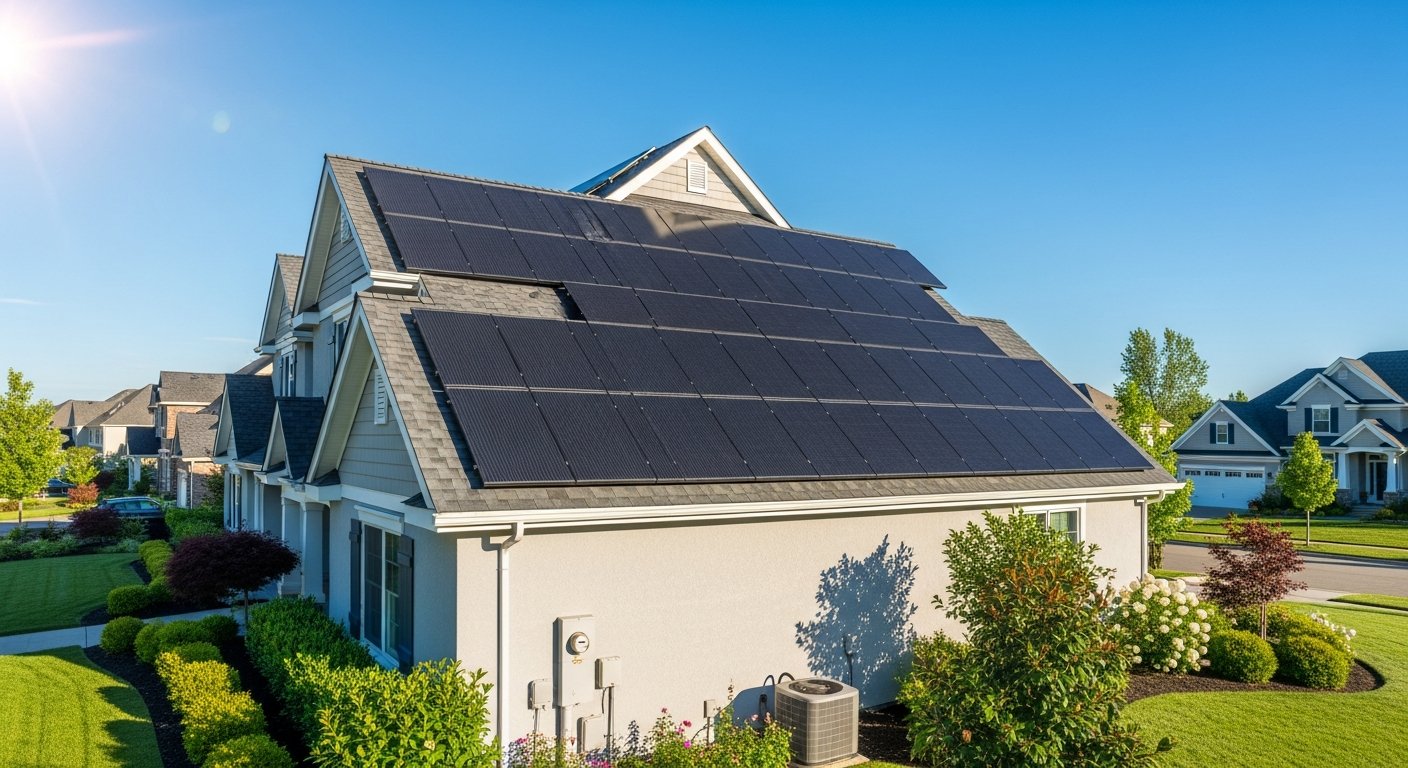
Solar Energy for Homes: Cut Bills and Boost Value
Discover how solar energy for homes can slash your electric bills, boost property value, and secure long-term savings. Start your journey today.

By Benjamin Taylor
Learn more about Solar Panel Installation and Repair for guides, costs, and what to expect.
Compare Solar Panel Installation and Repair Pros Near You

Enter your ZIP code to compare top-rated local professionals and request free quotes.
Imagine waking up on a scorching summer morning in Texas or Florida, knowing your air conditioner will run all day without a spike in your electric bill. That is the everyday reality for homeowners who have embraced solar energy for homes. The technology has moved from a niche environmental statement to a mainstream financial strategy. With electricity rates climbing across the United States, solar panels have become a way to take control of your monthly expenses and invest in your property's future. But the decision to go solar is not just about slapping panels on your roof. It involves understanding your energy usage, navigating financing options, and choosing the right installer. This guide will walk you through the critical steps, benefits, and potential pitfalls, so you can make an informed choice that fits your budget and your home. Whether you are motivated by savings, resilience, or sustainability, the path to solar starts with accurate information.
The current landscape of residential solar is more accessible than ever. Federal tax credits, state-level incentives, and innovative financing like solar leases and power purchase agreements (PPAs) have lowered the upfront barriers. In fact, many homeowners install solar with zero money down. But the long-term financial payoff, which can be tens of thousands of dollars over the system's lifespan, depends heavily on your specific situation. Factors like your roof's orientation, shading, local electricity rates, and net metering policies all play a role. Understanding these variables is the first step toward a system that actually delivers on its promise. As you read on, you will learn how to evaluate your home's solar potential, compare quotes effectively, and avoid common mistakes that can turn a great investment into a costly headache.
Why Solar Is a Smart Financial Move for Your Home
The most compelling reason homeowners switch to solar is the direct reduction in monthly electricity costs. A properly sized solar array can generate enough power to cover a significant portion, or even all, of your household's energy consumption. This translates to immediate savings that grow as utility rates inevitably rise. Over the 25 to 30 year lifespan of a typical solar panel system, these savings can accumulate to a substantial five or six figure sum. This is not just speculation; it is the core value proposition that has driven the explosive growth of residential solar in states like California, Texas, and Florida.
Beyond the monthly bill relief, solar panels also increase your home's resale value. Studies have consistently shown that homes with solar energy systems sell for a premium compared to comparable homes without them. This is because buyers recognize the long-term savings and are willing to pay more for a property with lower operating costs. In competitive real estate markets, a solar installation can be a decisive differentiator. Furthermore, solar provides a hedge against unpredictable energy price spikes. When you generate your own power, you are less vulnerable to rate hikes from your utility company, giving you a sense of energy independence and budget certainty that is hard to put a price on.
However, the size of your savings depends on several factors. Your local electricity rate is the biggest one: the more you pay per kilowatt-hour, the more each solar panel saves you. Net metering policies, which credit you for excess power you send back to the grid, also significantly impact your return on investment. Some states have moved to reduce these credits, so it's crucial to understand your utility's current rules. This is where a personalized assessment becomes invaluable. While general guides can set expectations, only a detailed analysis of your roof and your energy bills can predict your actual savings. To see how different scenarios play out, you can start by exploring our guide on does solar energy save money, which breaks down the math behind the investment.
Understanding the Costs and Financing Options
The upfront cost of a solar panel system can appear intimidating, often ranging from $15,000 to $30,000 before incentives. But this is only one side of the equation. The federal Investment Tax Credit (ITC) currently allows you to deduct 30% of your system's cost from your federal taxes, which dramatically reduces the net price. Many states and local utilities also offer additional rebates, tax credits, or performance-based incentives. For example, some utilities offer cash rebates per watt installed, while others provide solar renewable energy certificates (SRECs) that can be sold for extra income. These incentives can shave thousands of dollars off the final price, making solar more affordable than most homeowners realize.
If you cannot pay for the system outright, there are several financing paths available. A solar loan is a popular option, allowing you to own the system after a series of fixed monthly payments that are often lower than your previous electric bill. This is known as a positive cash flow scenario, where your savings outpace the loan payment. Another route is a solar lease or a Power Purchase Agreement (PPA). With these options, you do not own the system; a third party owns and maintains it, and you pay a fixed rate for the power it generates. This requires no upfront investment and simplifies maintenance, but you forgo the tax credits and the long-term equity that ownership provides. Choosing the right financing depends on your cash flow, your tax liability, and how long you plan to stay in your home.
To help you navigate these choices, here is a breakdown of the common financing structures:
- Cash Purchase: You pay the full cost upfront. This yields the highest long-term savings because you own the system and all its incentives, but it requires significant capital.
- Solar Loan: You finance the system with a loan, own it from day one, and claim the tax credit. Monthly payments are typically structured to be less than your average utility bill.
- Solar Lease: You rent the equipment from a provider. There is no upfront cost, and you pay a fixed monthly lease fee, often with an annual escalator. You do not own the system or receive incentives.
- Power Purchase Agreement (PPA): You agree to buy the electricity generated by the system at a set per-kWh rate, usually lower than the utility's rate. This hedges against rising energy costs without ownership.
Each financing method has its pros and cons. Cash and loans build equity and maximize savings, but they require creditworthiness or capital. Leases and PPAs offer convenience and immediate savings, but they can complicate home sales and often lock you into long-term contracts. As you weigh these options, it is wise to compare the total cost of ownership over the system's lifetime. A solar professional can run these numbers for you, but you can also get a preliminary idea by using online calculators. Remember, the cheapest option is not always the best value; consider the long-term financial implications and your own risk tolerance.
How to Evaluate Your Home's Solar Potential
Before you fall in love with a specific solar panel brand, you need to assess whether your roof is a good candidate. The first thing to check is your roof's orientation and tilt. In the northern hemisphere, south-facing roofs with a tilt between 15 and 40 degrees capture the most sunlight. East and west-facing roofs can still work well, but they produce less energy, especially in the morning or late afternoon. If your roof is heavily shaded by trees or neighboring buildings, solar may not be cost-effective unless you are willing to trim vegetation or consider ground-mounted panels. A professional solar installer will use tools like a solar pathfinder or satellite imagery to calculate your roof's solar potential accurately.
Next, consider the age and condition of your roof. Solar panels are designed to last 25 to 30 years, so if your roof is nearing the end of its lifespan, it is wise to replace it before installing panels. Removing and reinstalling panels for a roof replacement later can add thousands of dollars to the project. Many homeowners combine a roof replacement with a solar installation to avoid this double cost. Also, check your local building codes and homeowners association (HOA) rules. Some HOAs have aesthetic restrictions, and some municipalities require specific permits. A reputable installer will handle these logistics, but you should be aware of any potential obstacles in your area.
Finally, examine your historical electricity usage. Your utility bills show your monthly and annual consumption in kilowatt-hours (kWh). A solar system should ideally cover 100% of your annual usage to maximize savings, but that is not always practical or necessary. If you plan to add an electric vehicle or a heat pump in the future, you might want a larger system to accommodate that increased demand. Conversely, if you have a small home with low consumption, a smaller system may be more appropriate. The key is to size the system correctly. An undersized system leaves savings on the table, while an oversized system may not get a good return on the excess power, depending on net metering rules. A good installer will perform a load analysis and design a system tailored to your specific needs.
Choosing the Right Solar Installation Company
The quality of your solar installation is just as important as the equipment itself. A poorly installed system can underperform, leak, or even pose a fire hazard. Therefore, selecting a reputable installer is critical. Start by getting multiple quotes from different companies. This not only gives you price comparison but also exposes you to different system designs and equipment recommendations. When evaluating quotes, do not just look at the total price. Scrutinize the details: the brand and model of panels, the inverter type, the warranty terms, and the estimated annual production. A slightly more expensive quote might include higher-efficiency panels or a better workmanship warranty, which could be worth the extra cost.
When interviewing installers, ask about their licensing, insurance, and certifications. In many states, solar installers must be licensed electricians or hold specific solar certifications. The North American Board of Certified Energy Practitioners (NABCEP) certification is the gold standard for solar professionals. Check their Better Business Bureau rating and read online reviews, but take them with a grain of salt. A few negative reviews among hundreds of positive ones is normal. Also, ask for references from recent installations in your area. A confident installer will happily provide these. Finally, understand the warranty coverage. Most solar panels come with a 25-year performance warranty, and inverters typically have a 10 to 12 year warranty. The installer should also offer a separate workmanship warranty, usually 5 to 10 years, covering the installation itself.
One of the most effective ways to compare installers is to use a service that provides multiple quotes from vetted providers. Instead of spending hours contacting companies individually, a quote comparison platform does the legwork for you. This is exactly what we facilitate at Free Solar Power Quotes. We connect you with reputable third-party installers in your area, allowing you to receive free, no-obligation quotes. This saves you time and ensures you are seeing a range of options. For a deeper look at how to evaluate these quotes and avoid common pitfalls, you can read our article on how to compare solar energy quotes online. It is a step-by-step guide that empowers you to make the best choice.
Maintenance and Long-Term Performance
Once your solar panels are installed, they require relatively little maintenance. They are built to withstand harsh weather, including hail, heavy rain, and high winds. However, to ensure they operate at peak efficiency, occasional cleaning is beneficial. Dust, pollen, bird droppings, and leaves can accumulate on the panels and reduce their output. In most regions, rainfall is enough to wash away light debris, but in dry, dusty climates, you may need to hose them down or hire a professional cleaning service. It is also wise to inspect your system periodically for any visible damage, such as cracks or loose wiring, though these are rare with modern systems.
Monitoring your system's performance is easier than ever. Most solar inverters come with a mobile app or web portal that tracks energy production in real time. You can compare your system's output to your expectations and spot any anomalies early. For example, if your production drops unexpectedly, it might indicate a panel issue or a tree branch casting a new shadow. Being proactive can help you address small problems before they become costly repairs. Your installer should also offer a maintenance plan or a monitoring service as part of the package. Clarify what is included in your installation agreement, such as annual inspections or remote troubleshooting.
The long-term performance of your solar system is also protected by warranties. The panel manufacturer's warranty guarantees a certain level of power output for 25 years, typically 80% or more of the original rating. The inverter warranty covers defects, and the installer's workmanship warranty covers installation-related issues. Keep all your warranty documents in a safe place and understand the claim process. If you ever need to make a claim, having these documents organized will save you time and frustration. In the unlikely event that your system fails, these warranties are your safety net. For more information on what to do if something goes wrong, your state's incentives and consumer protection laws can also be a resource. The future outlook on solar support is positive, but it is always smart to be informed. You can stay updated by reviewing the future outlook on solar energy support.
Common Mistakes to Avoid When Going Solar
Even with the best intentions, many homeowners make avoidable errors when navigating the solar process. One of the most common is focusing solely on the lowest price per watt. This can lead you to a subpar installer or low-quality equipment that costs more in the long run due to reduced efficiency or reliability issues. Instead, evaluate the total value, including equipment quality, warranties, and the installer's reputation. Another frequent mistake is ignoring the fine print in the contract. For example, some solar leases have annual escalator clauses that increase your payments by 2% to 3% each year, which can erode your savings over time. Always read the contract thoroughly and ask questions about anything you do not understand.
Another error is not planning for future energy needs. If you buy an electric vehicle or add a pool pump a few years after going solar, your system may not be large enough to cover your increased consumption. Adding panels later can be more expensive and complicated. Conversely, some homeowners oversize their system significantly, hoping to make a profit from net metering credits, but many utilities have changed their policies to reduce the value of excess generation. A balanced approach is to size your system to cover your current and near-future needs, but not significantly more. A professional installer can help you model these scenarios.
Finally, do not rush into a decision without comparing options. The solar industry is competitive, and quotes can vary by 20% or more for the same system. Taking the time to get multiple quotes is one of the most effective ways to ensure you are getting a fair deal. It also gives you leverage to negotiate. However, be cautious of offers that seem too good to be true, such as a system that promises to eliminate your entire electric bill for a suspiciously low price. If it sounds unrealistic, it probably is. Do your research, ask the right questions, and you will be well on your way to a successful solar installation that provides decades of clean, affordable energy.
In conclusion, solar energy for homes represents a powerful opportunity to cut your utility bills, increase your property value, and contribute to a cleaner environment. But it is not a one-size-fits-all solution. It requires careful planning, a clear understanding of your energy usage, and a choice of the right financing and installation partner. By following the guidance in this article, you can avoid the common pitfalls and make a decision that pays off for years to come. The savings you can achieve are not just theoretical; they are the result of smart, informed choices. Start by getting personalized quotes from trusted providers, and take the first step toward energy independence today.
Learn more about Solar Panel Installation and Repair for guides, costs, and what to expect.
Compare Solar Panel Installation and Repair Pros Near You
Enter your ZIP code to compare top-rated local professionals and request free quotes.