
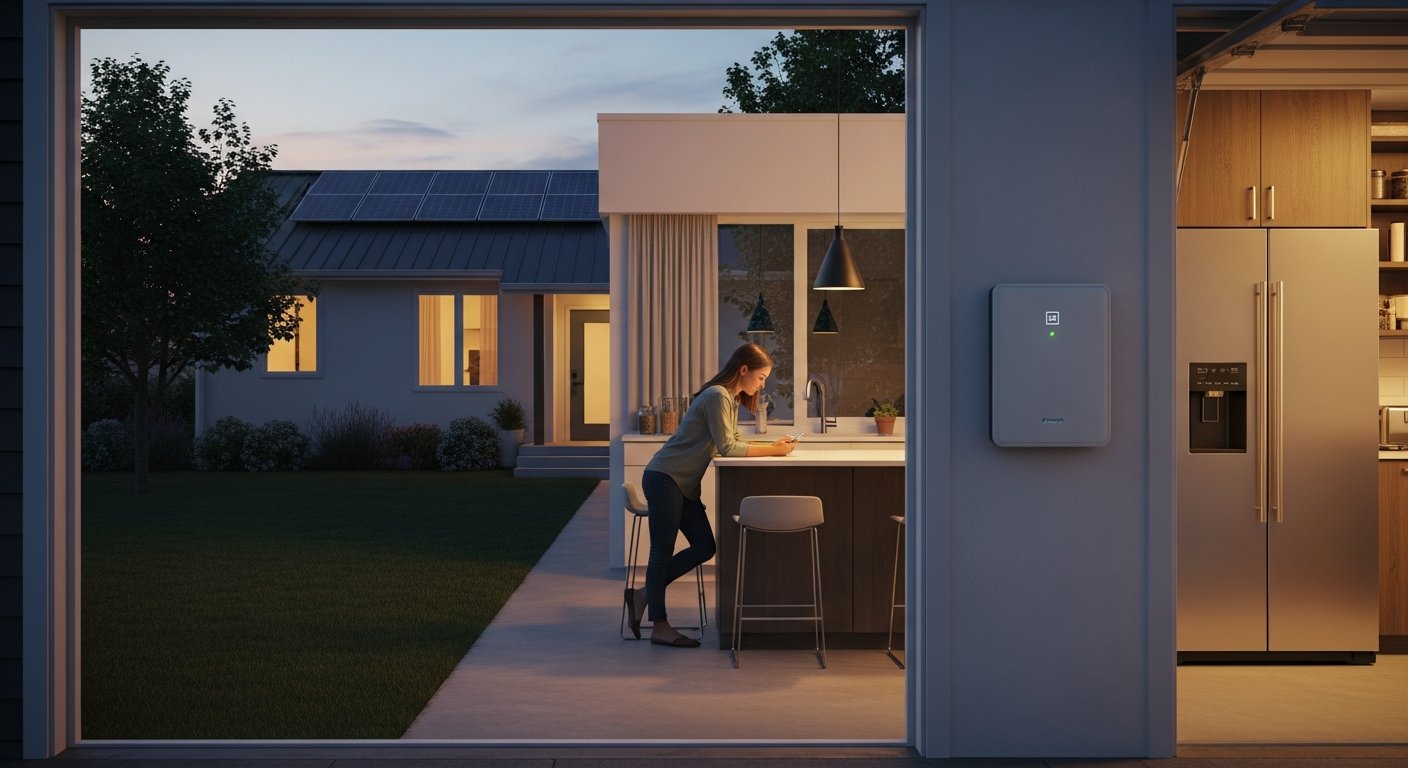
Solar Battery Backup: Your Home Power Safety Net
Solar battery backup keeps your lights on during outages and cuts energy bills. Discover how it works, costs, and if it is right for you.

By Benjamin Taylor
Learn more about Solar Panel Installation and Repair for guides, costs, and what to expect.
Compare Solar Panel Installation and Repair Pros Near You

Enter your ZIP code to compare top-rated local professionals and request free quotes.
When the grid goes down, most homeowners are left in the dark, literally. But what if you could keep your lights on, your fridge running, and your phone charged, all without relying on a noisy, fuel-guzzling generator? That is the promise of a solar battery backup system. It is not just about emergency preparedness; it is about taking control of your energy future, maximizing your solar investment, and achieving true energy independence. This guide will walk you through everything you need to know about solar battery backup, from how it works to whether it is the right choice for your home.
What Is a Solar Battery Backup and How Does It Work?
A solar battery backup is a system that stores excess electricity generated by your solar panels for later use. When your panels produce more power than your home needs, the surplus energy is directed into the battery instead of being sent back to the grid. Then, when your panels are not producing (like at night) or during a power outage, you can draw from that stored energy. This setup is often called a solar-plus-storage system.
The core components include the solar panels, an inverter (which converts DC power from panels to AC power for your home), and the battery itself, which is typically a lithium-ion unit. Many modern systems use a single hybrid inverter that manages both solar and battery power, simplifying installation and monitoring. The battery is charged and discharged automatically, and you can monitor your energy flows in real time through a smartphone app.
One key concept to understand is the difference between AC-coupled and DC-coupled systems. In an AC-coupled system, the battery has its own inverter and connects to your home's AC bus, making it easy to retrofit onto an existing solar array. A DC-coupled system connects the battery directly to the solar panel's DC side, which can be more efficient but is often more complex to install. Your installer will recommend the best configuration based on your home and needs.
Why Homeowners Are Adding Battery Backup
The primary motivation for most homeowners is resilience. Power outages are becoming more frequent and longer due to extreme weather events, aging infrastructure, and increased demand. A solar battery backup provides a seamless transition to backup power, often within milliseconds, so you barely notice a blip. Unlike a portable generator, a battery is quiet, requires no fuel, and runs emission-free inside or outside your home.
Beyond emergency power, batteries offer significant financial and lifestyle benefits. With a battery, you can store energy when electricity rates are low (like during the day with solar) and use it during peak hours when rates are high. This practice, known as load shifting or peak shaving, can meaningfully reduce your electricity bills. In areas with time-of-use (TOU) rates, a battery can be a game-changer. According to a study by the Lawrence Berkeley National Laboratory, homes with solar-plus-storage can reduce their grid purchases by up to 80%.
Here are the key benefits in a nutshell:
- Uninterrupted power during outages, keeping essentials like medical devices, Wi-Fi, and refrigeration running.
- Reduced electricity costs through peak shaving and increased self-consumption of solar energy.
- Increased energy independence, reducing reliance on the utility grid and its rate hikes.
- Potential grid services: some utilities offer incentives for discharging your battery during peak demand events.
- Environmental impact: maximizing your use of clean solar energy reduces your carbon footprint.
However, it is not all sunshine and savings. The upfront cost of a battery is substantial, typically ranging from $10,000 to $20,000 for installation. The payback period can be long, and if your utility offers net metering (crediting you for excess solar energy), the financial case for a battery may be weaker. Batteries also have a finite lifespan, usually warrantied for 10 years or 70% capacity retention, so you may need to replace them during your solar system's 25+ year life.
Solar Battery Backup vs. Generator: A Quick Comparison
Choosing between a battery and a generator depends on your priorities. A generator can run indefinitely as long as you have fuel, making it ideal for extended outages. However, they require maintenance, make noise, and produce fumes. A solar battery is quiet, low-maintenance, and automatically powers your home without any action on your part. The trade-off is that a battery has limited capacity, usually enough for a day or two of essential loads. For most homeowners, a battery is the more convenient and eco-friendly choice, but a generator may be necessary for long-term outages or high-power needs. To see a detailed breakdown of these two options, check out our guide on home battery backup vs generator.
What Can a Solar Battery Power in Your Home?
Understanding a battery's capacity is crucial to setting realistic expectations. Battery capacity is measured in kilowatt-hours (kWh), which represents the amount of energy it can store. A typical home battery has a capacity of 10 to 15 kWh, but usable capacity is often slightly less to protect the battery's health. To put that in perspective, an average U.S. home uses about 30 kWh per day. So a 10 kWh battery can cover roughly one-third of your daily usage, but you will not be running everything at once.
With a full battery, you can power essential circuits like lights, a refrigerator, a sump pump, Wi-Fi, and small electronics for several hours to a full day. High-draw appliances like central air conditioning, electric ovens, and electric water heaters will quickly drain a battery. Many homeowners choose to install a sub-panel that isolates critical loads during an outage, so the battery can sustain them longer. The goal is to prioritize what is truly essential, not to run your home as if nothing happened.
To maximize your backup time, you can adopt a habit of using high-energy appliances during daylight hours when solar panels are charging the battery. You can also set your battery to charge from the grid at off-peak rates if you want extra insurance for an upcoming storm. The key is to align your energy usage with your battery's capabilities.
How to Choose the Right Solar Battery for Your Home
Selecting the right battery involves evaluating several factors: capacity, power rating, depth of discharge, round-trip efficiency, warranty, and chemistry. Capacity (kWh) tells you how much energy it can store, while power (kW) tells you how much it can deliver at once. A battery with 5 kW power can run a 5,000-watt load, but if you need to start a large AC unit, you will need higher surge capacity.
Depth of discharge (DoD) indicates how much of the battery's capacity you can safely use. A 90% DoD means you can use 9 kWh of a 10 kWh battery. Round-trip efficiency measures how much energy is lost in the charge-discharge cycle; 90% efficiency is good. Lithium-ion batteries are the standard due to their high energy density and long cycle life. Lead-acid batteries are cheaper but less efficient and have shorter lifespans.
Warranty is critical. Look for a warranty that guarantees a certain number of cycles or years, and a minimum capacity retention (e.g., 70% after 10 years). Reputable manufacturers like Tesla, LG, Enphase, and Sonnen offer solid warranties. Your installer should help you size the battery based on your outage needs and budget. For a detailed look at the costs involved, our article on solar battery storage cost for homeowners provides valuable insights.
Costs, Incentives, and Financial Payback
The installed cost of a solar battery system varies widely based on brand, capacity, and complexity. On average, you can expect to pay between $1,000 and $2,000 per kWh of installed capacity. For a typical 10 kWh system, that is $10,000 to $20,000 before incentives. However, the federal Investment Tax Credit (ITC) offers a 30% tax credit for battery installations that are paired with solar (or even standalone, if the battery is charged by solar). Many states and utilities also offer additional rebates or incentives, which can significantly reduce the net cost.
When evaluating the financial payback, consider your local electricity rates, net metering policies, and the value you place on backup power. If your utility offers generous net metering, sending excess solar to the grid may be more cost-effective than storing it. However, if you are subject to TOU rates or demand charges, a battery can save you money by shifting your consumption. The peace of mind and resilience during outages is a non-financial benefit that many find worth the investment.
To get a precise estimate for your home, it is best to consult with a professional solar installer who can model your energy usage and local rates. They can also help you navigate available incentives and choose a system that fits your goals.
Installation and Maintenance: What to Expect
Installing a solar battery is a job for licensed professionals. It involves electrical work, mounting the battery (usually on a wall in a garage or utility room), and connecting it to your solar system and electrical panel. The process typically takes one to two days, depending on the complexity. Your installer will need to obtain permits and schedule inspections, which can add a few weeks to the timeline.
Once installed, the battery requires minimal maintenance. Most lithium-ion batteries are sealed and maintenance-free. You will monitor its performance via an app, and many systems automatically run self-diagnostics. It is a good idea to keep the battery area clean and ensure proper ventilation. The battery's life is measured in cycles (one full charge and discharge). Most are rated for 5,000 to 10,000 cycles, which translates to 10 to 15 years of typical daily use. After that, the battery's capacity will degrade, but it will still function, just with less storage.
Is a Solar Battery Backup Worth It for You?
The decision to invest in a solar battery backup is highly personal. If you experience frequent power outages, have critical medical equipment, or simply value the peace of mind of energy independence, a battery is an excellent investment. If you live in an area with high electricity rates and no net metering, a battery can provide solid financial returns. However, if you rarely have outages and have great net metering, the battery may never pay for itself.
Before making a decision, talk to a trusted solar advisor. They can assess your energy needs, compare battery options, and provide a clear cost-benefit analysis. Remember that a battery adds value to your home and contributes to a more sustainable future. To see how different systems compare, you can explore our solar battery backup explained guide for more details.
Making the Smart Move
Solar battery backup is more than just a luxury; it is becoming a smart home upgrade that offers security, savings, and sustainability. As the grid becomes less reliable and electricity costs rise, the value of storing your own energy only increases. Whether you are looking to power your home through a storm or simply want to reduce your carbon footprint, a battery system is a powerful addition to your solar setup. The key is to do your research, understand your needs, and work with a reputable installer who can design a system that meets your specific requirements. If you are ready to explore your options, getting free, no-obligation quotes from vetted solar providers is the next step. Compare offers, ask questions, and choose a system that gives you the energy security you deserve. Your home, your wallet, and the planet will thank you.