
Pre Installation Home Energy Audit: Right Solar Sizing
A pre installation home energy audit for solar sizing prevents costly mistakes, ensuring your system matches your exact energy needs for maximum savings.

By Liam Parker
Learn more about Solar Panel Installation and Repair for guides, costs, and what to expect.
Compare Solar Panel Installation and Repair Pros Near You

Enter your ZIP code to compare top-rated local professionals and request free quotes.
Imagine paying for a solar array that never quite covers your electricity bill, or worse, overspending on a system that produces far more power than you actually use. Both scenarios are frustrating, yet they are surprisingly common. The culprit is usually the same: skipping the essential step of a pre installation home energy audit for solar sizing. This audit is not just a bureaucratic checkbox; it is the foundational analysis that determines whether your solar investment delivers optimal financial returns and true energy independence. Without it, you are essentially guessing at the size of a system that should be engineered with precision.
This guide will walk you through why this audit is non-negotiable, how it directly influences the size of your solar panel system, and the steps you need to take to ensure you get the most accurate assessment possible. By understanding your home's unique energy profile, you can confidently move forward with a solar installation that is tailored to your needs, avoiding costly mistakes and maximizing the benefits of renewable energy. Let's look at the process that turns a simple solar quote into a smart, data-driven investment.
What Is a Pre Installation Home Energy Audit for Solar Sizing?
A pre installation home energy audit for solar sizing is a comprehensive review of your household's energy consumption patterns and your home's physical characteristics. It goes far beyond simply looking at your past utility bills. This audit examines the efficiency of your appliances, insulation, windows, and HVAC systems, and it identifies any energy leaks or inefficiencies that could be inflating your electricity usage. The primary goal is to establish a clear, accurate baseline of how much energy your home truly needs. This data is then used to calculate the precise size of a solar panel system that can realistically offset that demand.
The insights from this audit are crucial for solar installers. When they design your system, they need to know not only your average kilowatt-hour (kWh) usage but also when you use the most power, how your usage might change in the future, and how your roof's orientation and shading affect solar generation. An audit provides a holistic view, preventing the common mistake of undersizing a system for an inefficient home or oversizing one for a property that could benefit from simple energy efficiency upgrades first. By aligning your system size with your actual, post-efficiency needs, you ensure that every solar panel you invest in is working as hard as possible for you.
Why the Audit Matters for Solar Sizing Accuracy
Solar panel systems are not one-size-fits-all. The right size for your home depends on a complex equation that includes your energy consumption, your roof's solar potential, and your financial goals. A pre installation home energy audit for solar sizing is the critical tool that solves this equation. It provides the precise data needed to avoid two common pitfalls: undersizing and oversizing.
Undersizing occurs when a system is too small to cover a meaningful portion of your electricity needs. This often happens when an installer relies on historical utility data without considering planned changes like adding an electric vehicle, a heat pump, or a growing family. An audit helps project future needs accurately. Oversizing, on the other hand, happens when a system is larger than necessary. While it might seem like a safe bet, it can lead to a longer payback period because the initial investment is higher than needed to simply offset your current usage. In areas with net metering, you might earn credits for excess production, but the return on that extra investment is often lower than the return on a correctly sized system. The audit helps you strike the perfect balance between cost and benefit.
Understanding Your Home's Energy Baseline
A key output of the audit is a detailed understanding of your annual and monthly energy consumption. This baseline is not just about the total kilowatt-hours; it's about the pattern of usage. For instance, does your home use more electricity in the summer due to air conditioning, or in the winter due to electric heating? Are you a daytime user with high consumption when solar panels are producing at their peak, or do you consume the majority of your power in the evening? By analyzing this data, solar designers can recommend a system that not only matches your total annual usage but also aligns with your time-of-use patterns to maximize savings, especially when paired with a solar battery.
Without this granular data, an installer might base your system size on a simple average, which can be misleading. For example, a home that uses very little electricity in the spring and fall but has a massive summer cooling load will need a larger system than a home with consistent, moderate usage. The pre installation audit captures these nuances, ensuring the system is designed to meet your true peak demands and seasonal variations, not just an annual average that could leave you with surprise high bills during certain months. This precision is the difference between a solar system that works for you and one that just exists on your roof.
Key Components of a Comprehensive Energy Audit
When you engage a professional for a pre installation home energy audit for solar sizing, you should expect a thorough evaluation that goes beyond glancing at a few past utility bills. A truly comprehensive audit will include several critical components, each contributing valuable data to the solar sizing equation. The process typically starts with a detailed review of your historical energy usage, usually the last 12 months of electricity bills. This provides a clear picture of your average monthly consumption and seasonal peaks. Following that, the auditor will assess your home's physical characteristics, including its size, orientation, insulation levels, window quality, and the efficiency of your major appliances.
To make this information more actionable, here are the key areas a professional auditor will investigate:
- Detailed Utility Bill Analysis: Reviewing 12 to 24 months of bills to identify baseline usage, peak demand periods, and any anomalies in consumption.
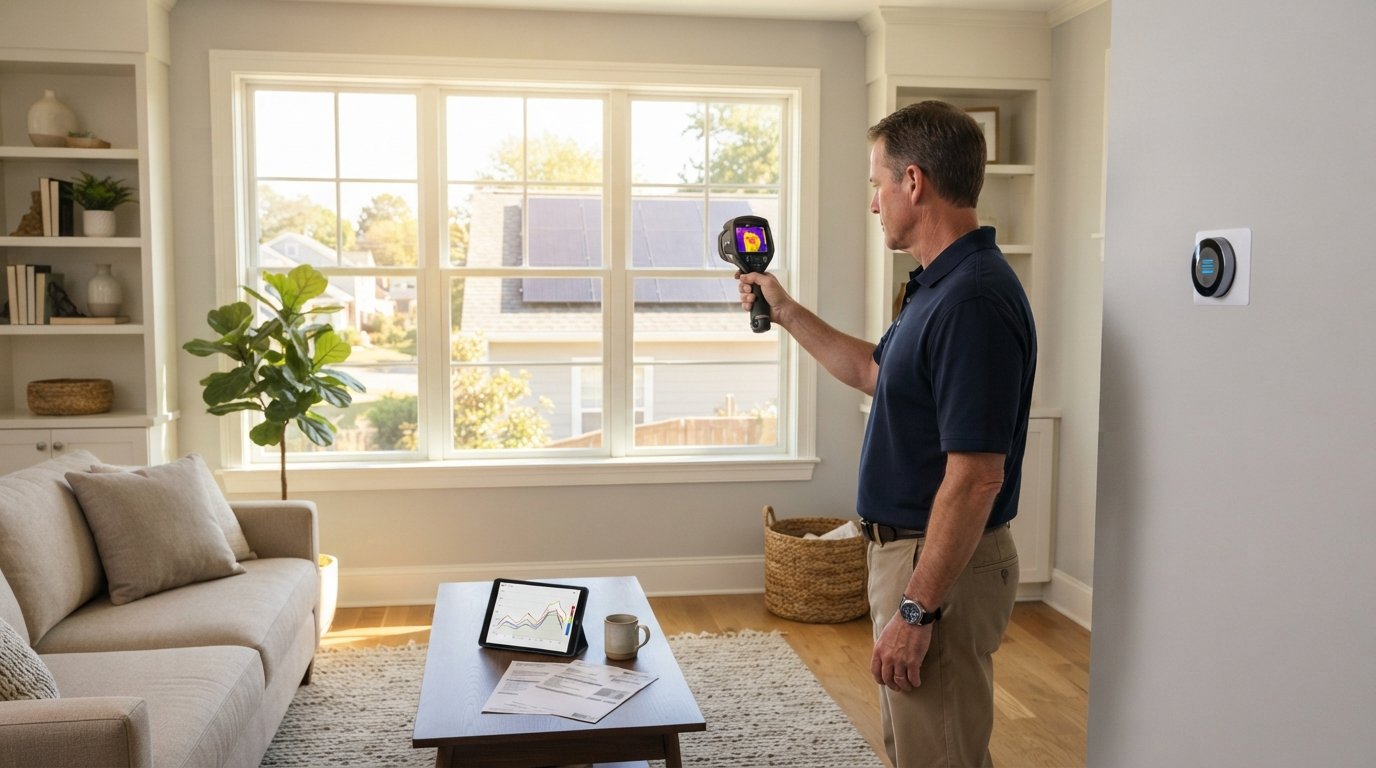
- Building Envelope Inspection: Checking for air leaks around windows, doors, and electrical outlets, and assessing the quality of insulation in your walls and attic. This helps identify energy waste that can be corrected before sizing your solar system.
- Appliance and Equipment Inventory: Cataloging all major energy consumers, including your HVAC system, water heater, refrigerator, washer/dryer, and any home office or entertainment equipment. The auditor will note their age, efficiency ratings, and estimated usage patterns.
- Lighting and Electronics Assessment: Evaluating the types of lightbulbs used (LED vs. incandescent) and the energy draw of electronics like televisions, computers, and gaming consoles that may be left on standby.
- Future Energy Needs Discussion: A good audit will also discuss your plans for the future, such as purchasing an electric vehicle (EV), adding a pool pump, or doing a major home addition. These future loads are crucial for sizing a system that will meet your needs for the long term.
After this thorough inspection, the auditor will compile a report that identifies areas of energy waste and recommends efficiency improvements. This report is a goldmine for solar sizing because it allows you to make your home as energy-efficient as possible before you commit to a solar array. By reducing your overall consumption first, you can install a smaller, more cost-effective solar system. The audit effectively ensures that you are not paying to generate electricity that is simply being wasted through poor insulation or inefficient appliances.
The Audit Process: From Data Collection to System Design
The journey of a pre installation home energy audit for solar sizing is a structured process that transforms raw data into a precise solar design. The first step is data collection, which involves the auditor gathering your utility bills and performing the on-site inspection. In many cases, the audit can be done in a virtual format using your smart meter data and a detailed video walkthrough of your home. This is often a low-cost or even free service offered by solar companies as part of their initial consultation. The goal is to capture all the information needed to understand your energy profile.
Once the data is collected, the next phase is analysis. The auditor will calculate your average daily and monthly energy usage, identify your peak demand, and model the impact of any recommended efficiency upgrades. This analysis is then fed into a solar design software. Using your roof's dimensions, orientation, pitch, and shading analysis (often done with satellite imagery or a physical roof inspection), the software calculates the optimal system size and layout. It will determine the number of panels needed to generate enough electricity to cover your specific consumption, taking into account local weather patterns and the expected performance degradation of the panels over their 25-year lifespan. The output is a system design that is tailored to your home's unique energy needs and physical constraints.
How Efficiency Upgrades Influence Solar Sizing
One of the most valuable outcomes of a pre installation audit is the identification of cost-effective energy efficiency measures. These upgrades can significantly reduce your energy consumption, which in turn reduces the size of the solar system you need. For example, replacing outdated, inefficient appliances with Energy Star-rated models, sealing air leaks, and adding insulation are all upgrades that can be done before installation. When these improvements are made, your solar installer can design a smaller, more affordable system that still covers a larger percentage of your overall energy load.
This approach is not just about saving money on the upfront cost of your solar system; it's about optimizing your long-term return on investment. By investing first in efficiency, you lower your overall energy needs, meaning your solar panels will produce a higher proportion of your total consumption, leading to faster payback and greater savings over time. The audit provides a clear roadmap for these improvements, ensuring that your solar investment is as efficient and effective as possible. It is a prime example of how a little upfront planning can yield significant financial and environmental benefits.
Choosing the Right Solar Installer for Accurate Sizing
Your choice of solar installer is perhaps the most critical decision you will make. A reputable and experienced installer will always conduct a thorough pre installation home energy audit for solar sizing before providing a final quote. They will not rely on simple averages or generic system sizes. Look for a company that is willing to spend the time to understand your specific needs and can show you a detailed system design that is based on your actual energy consumption. They should be able to explain how they calculated your system size and be transparent about their assumptions. As you evaluate different providers, you might find it helpful to review our guide on solar system installation essentials to better understand the full process and what to expect.
When you meet with potential installers, ask about their audit process. Do they use proprietary software? Do they factor in future energy needs? Are they able to provide a breakdown of the estimated energy production and how it aligns with your historical usage? An installer who is confident in their audit will be happy to answer these questions. They should also be clear about any assumptions they are making, such as the amount of sunlight your roof receives or the efficiency of your appliances. By choosing an installer who treats the audit as a vital first step, you are setting the stage for a solar system that is perfectly matched to your home, ensuring you get the maximum financial and environmental return on your investment. You can also use a service like SolarEnergy.ai to get a quick, data-driven estimate of your solar potential, which can be a great starting point for your conversations with installers.
Common Mistakes to Avoid in Solar Sizing
Even with the best intentions, homeowners can fall into traps that lead to an incorrectly sized solar system. The most common mistake is skipping the energy efficiency assessment entirely. People often assume that adding solar panels is the only step needed to reduce their bills, ignoring the significant impact of an under-insulated attic or a 20-year-old air conditioner. By not addressing these issues first, you might end up with a larger, more expensive solar system than necessary. Another frequent error is not considering future changes in energy consumption. If you plan to buy an electric vehicle in the next few years, your current usage will be far lower than your future needs. A correctly sized system should account for this known future load.
Another critical mistake is focusing solely on the system's total cost per watt or its maximum power output, rather than its ability to meet your specific energy goals. For instance, you might be tempted by a high-efficiency panel, but if your roof has limited sun exposure, a larger array of standard panels might be more effective and cheaper. The only way to navigate these trade-offs is with the detailed data from an energy audit. This data allows you to make an apples-to-apples comparison of quotes from different installers, ensuring that each quote is based on the same set of assumptions about your home's energy consumption and solar potential. Without this baseline, you risk making a decision based on marketing hype rather than sound engineering.
The Financial Payoff of a Properly Sized System
The ultimate benefit of a pre installation home energy audit for solar sizing is the financial payoff. A system that is sized correctly will have a shorter payback period, meaning you will start seeing a positive return on your investment sooner. This is because you are not paying for unnecessary extra capacity. Every dollar you invest is working to offset a real kilowatt-hour of consumption. You will also avoid the disappointment of receiving a high utility bill during a particularly hot summer or cold winter because your system was undersized to handle your peak loads. With a properly sized system, you are protecting yourself from these fluctuations.
Moreover, a well-designed system that is based on an accurate audit can increase the value of your home. A prospective buyer will see a solar array that is appropriately sized for the property, providing predictable energy savings and a clear financial benefit. In contrast, an oversized system might be a turnoff because it represents a larger upfront investment for the new owner, while an undersized system might be seen as inadequate. By investing in a pre installation audit, you are not only securing the best performance and savings for yourself but also enhancing the long-term value and marketability of your property. It is a step that pays dividends for years to come.
Ultimately, the success of your solar project hinges on the quality of the planning you do upfront. A comprehensive energy audit is not an extra expense; it is your insurance policy against a poor investment. It ensures that you are making an informed decision based on reality, not on guesswork. So, before you sign any contract, ask your installer about their audit process and make sure it is as thorough as the one we have described. Your future self, and your wallet, will thank you.